Contrast Supervision in Medical Imaging: What It Is, Why It Matters, and How It Works
Contrast supervision is the clinical oversight required during contrast-enhanced CT and MRI to ensure patient safety, regulatory compliance, and rapid response to adverse reactions. This guide explains what contrast supervision is, the types of supervision involved, and how modern virtual supervision models are reshaping imaging workflows.

Tether Supervision
Contrast Supervision
Contrast supervision is a core patient-safety requirement in medical imaging and a foundational element of how radiology departments, IDTFs, and outpatient imaging centers manage contrast-enhanced CT and MRI. Whether an organization performs hundreds or thousands of contrast studies each month, understanding what contrast supervision entails—and the differences between general, direct, and virtual direct supervision—is essential for compliance, operational efficiency, and high-quality patient care. As diagnostic imaging volumes continue to rise and contrast agents become more widely used for CT, MRI, CTA, MRA, and other advanced studies, healthcare leaders increasingly seek clear guidance on how supervision must be structured, who may provide it, and how new federal policies such as virtual direct supervision affect daily workflows. This article provides a comprehensive, evergreen overview designed to answer the most common questions about contrast supervision, how it works, and why it is central to safe imaging operations.
What Is Contrast Supervision?
Contrast supervision refers to the oversight required when iodinated or gadolinium-based contrast media is administered during diagnostic imaging procedures. Because contrast administration carries potential risks—including physiologic reactions, allergic responses, extravasation, and, in rare cases, life-threatening events—regulators require a qualified physician, typically a radiologist, to be immediately available during the study. This ensures that if a patient develops symptoms, a supervising provider can intervene quickly, guide the onsite technologist team, and initiate appropriate clinical management. At its core, contrast supervision is about maintaining patient safety and ensuring that imaging studies involving IV contrast occur within a controlled, medically supervised environment.
Why Contrast Supervision Is Required
Contrast supervision exists because contrast-enhanced imaging requires both clinical judgment and rapid response capabilities. Even though most contrast reactions are mild, severe reactions can progress quickly. To maintain a high standard of care, federal payers, state medical boards, technologist licensing bodies, and accreditation organizations such as the ACR require that contrast administration occur under a defined level of supervision. This involves not only the presence or availability of a supervising clinician but also the readiness of onsite technologists, emergency equipment, and documented escalation protocols. Contrast supervision therefore protects patients, ensures regulatory compliance, and allows imaging centers to deliver consistent, safe, and timely diagnostic services across varied geographic locations and staffing models.
Types of Contrast Supervision
Although terminology varies between federal and state rules, most imaging organizations recognize three types of supervision: general supervision, direct supervision, and personal supervision. These definitions originated with Medicare and have since become the baseline for most imaging policies nationwide.
General supervision means the procedure is performed under the overall direction of a physician, but that individual does not need to be onsite or immediately available. General supervision applies to many diagnostic imaging studies, but not to contrast administration.
Direct supervision is the standard for contrast-enhanced CT and MRI. Under direct supervision, the supervising physician or qualified non-physician practitioner must be immediately available—traditionally requiring physical presence within the office or imaging suite. The purpose is to ensure that a clinician can respond without delay to adverse reactions or clinical questions during the exam.
Personal supervision requires the supervising provider to be physically present in the room. This is rarely required for routine contrast imaging but may apply to certain high-risk or invasive procedures.
While all three categories are still used, the supervision model for Level 2 diagnostic tests—including contrast-enhanced CT and MRI—has undergone a major transformation with the introduction of virtual direct supervision.
The Shift to Virtual Direct Supervision
Beginning January 1, 2026, CMS permanently authorizes virtual direct supervision for Level 2 diagnostic tests in physician offices, IDTFs, hospital outpatient departments, and off-campus provider-based clinics—where state law permits it. Under this model, a supervising radiologist may fulfill the “immediately available” requirement via real-time, two-way audio–video communication, rather than being physically located on site. This shift reflects the reality of modern imaging operations: radiologists increasingly cover multiple sites, imaging volumes are distributed across networks, and many regions struggle to secure consistent on-site coverage. Virtual direct supervision allows for immediate availability without sacrificing safety, so long as the technology supports uninterrupted audiovisual communication and the supervising clinician can rapidly take over decision-making when required.
Virtual direct supervision does not reduce the supervision standard; instead, it modernizes how that supervision can be delivered. Audio-only technology does not qualify, and organizations must maintain escalation protocols, emergency preparedness, and technologist training consistent with existing safety requirements.
State Law and Scope-of-Practice Considerations
Even though CMS has recognized virtual direct supervision, state law ultimately determines whether remote supervision is allowed, restricted, or prohibited. States vary widely: some explicitly allow virtual supervision of contrast-enhanced imaging, others are silent (resulting in conservative interpretation), and some require the supervising physician to be physically present. Imaging centers must reconcile CMS rules, state radiology and technologist board guidance, and their own medical staff bylaws before implementing any supervision model. Because contrast administration is a medical act, these layers of regulation exist to ensure patient-specific risks are assessed and managed appropriately. Understanding state-level variations is essential for imaging networks that operate across multiple jurisdictions.
How Contrast Supervision Works in Practice
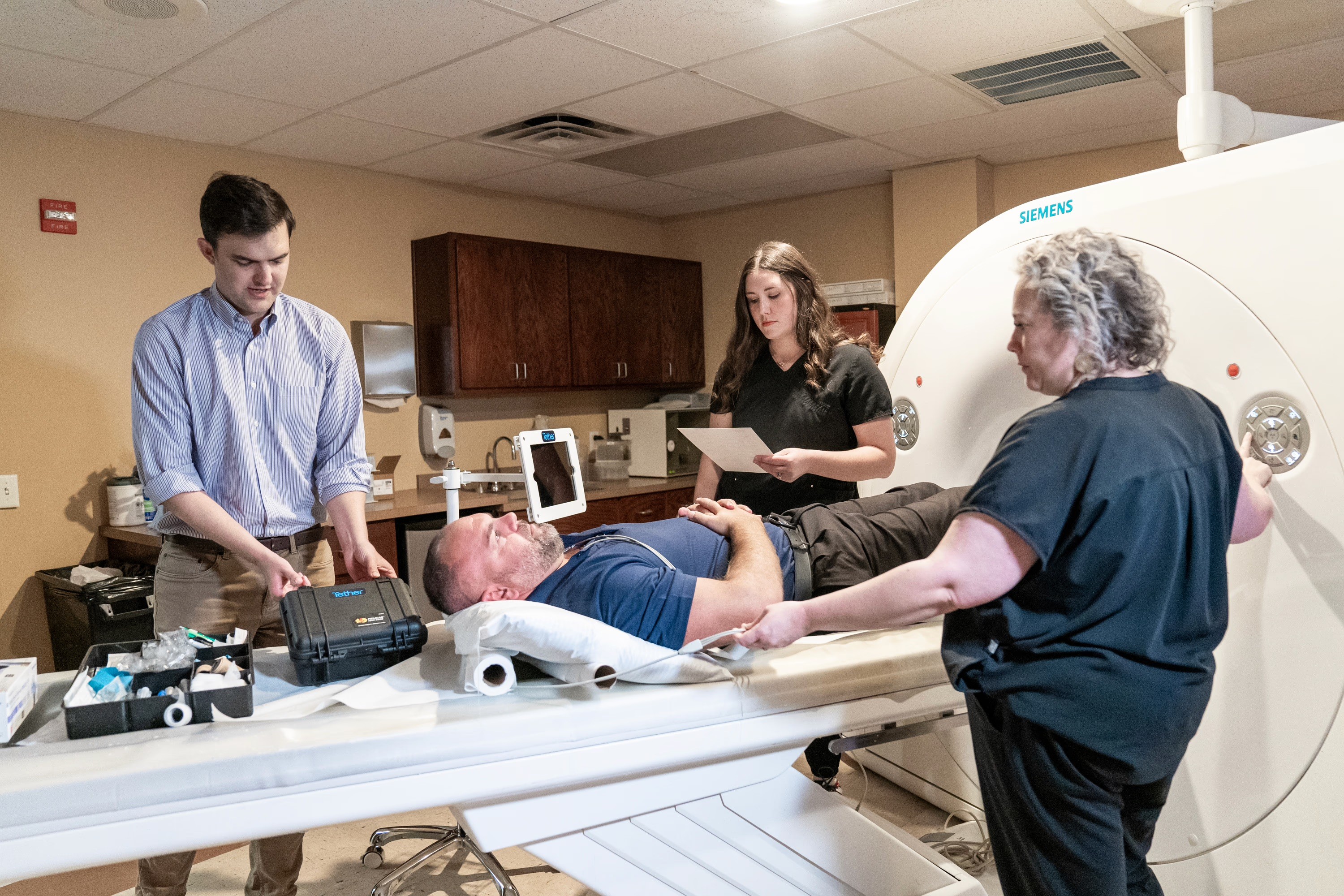
A modern contrast supervision workflow includes far more than simply having a radiologist “on call.” It requires structured protocols that govern pre-procedure evaluation, intraprocedural monitoring, and emergency response. Imaging technologists play a central role: they screen patients for risk factors, initiate IV access, communicate symptoms to the supervising clinician, and activate escalation procedures when necessary. Meanwhile, the supervising radiologist must remain interruptible, immediately available, and able to provide real-time clinical direction. Facilities also maintain emergency medications, follow the ACR Manual on Contrast Media, and document every aspect of supervision—from reaction management to technologist competency. Whether delivered on-site or virtually, contrast supervision is a coordinated, high-reliability clinical process.
Who Is Allowed to Provide Contrast Supervision?
Most states require that contrast supervision be performed by a licensed physician, typically a diagnostic radiologist. In some jurisdictions, qualified non-physician practitioners such as physician assistants or nurse practitioners may supervise contrast administration, but this depends entirely on state law and facility bylaws. Radiologic technologists cannot independently supervise contrast administration, though they are trained to recognize early signs of adverse reactions, support clinical interventions, and escalate concerns quickly. Ultimately, the supervising clinician must have training in contrast reaction management, be immediately available, and be empowered to direct patient care during the study.
Why Contrast Supervision Matters for Imaging Centers
As imaging demand grows and radiology staffing remains strained, contrast supervision has become an operational bottleneck for many organizations. Reliable supervision enables higher throughput, reduces study delays, stabilizes scheduling, and improves patient experience. It also protects organizations from regulatory risk, payer denials, and liability concerns. With CMS’s modernization of supervision definitions and the rise of virtual direct supervision, imaging centers now have more flexible options to maintain compliance while improving efficiency—particularly in distributed, multi-site networks or regions with limited onsite radiologist availability.
How Tether Supervision Supports Modern Contrast Supervision Models
Tether Supervision is built specifically for today’s contrast supervision environment. We provide a hybrid model that integrates virtual direct supervision, on-site clinical support, and technologist training to meet federal and state requirements while improving operational reliability. Our clinicians are immediately available through HIPAA-compliant, real-time audio–video connections and supported by structured escalation pathways, incident reporting tools, and quality assurance frameworks tailored to Level 2 diagnostic imaging. For states that require on-site presence, Tether deploys qualified on-site personnel to meet compliance without disrupting workflows. This comprehensive approach allows imaging centers to safely scale contrast-enhanced CT and MRI services while meeting evolving regulatory expectations.
Conclusion
Contrast supervision is a foundational component of safe, compliant imaging operations. Whether delivered on-site or through virtual direct supervision, it ensures that patients undergoing contrast-enhanced CT or MRI receive appropriate monitoring, rapid access to medical intervention, and consistent quality of care. As CMS modernizes supervision definitions and imaging volumes continue to rise, organizations that understand the nuances of contrast supervision—and implement high-reliability workflows across all sites—are best positioned to deliver timely, safe, and efficient diagnostic services. Tether Supervision continues to support imaging centers nationwide with the clinical expertise, training, and supervision infrastructure needed to meet these evolving standards.

Read more from Tether Supervision