Radiology’s Workforce Crisis Is Escalating. Why Virtual Contrast Supervision Is Becoming a Core Stability Strategy
Radiology faces a 94% staffing shortage. Learn how virtual contrast supervision helps imaging centers maintain safe, reliable CT/MRI operations despite workforce gaps.

Tether Supervision
Virtual Contrast Supervision
Radiology practices across the United States are entering 2026 facing the same acute pressure point: workforce shortages that are no longer episodic but structural. According to the national RBMA Hot Topics August 2025 survey data, 94% of radiology practices reported staffing shortages in the past year, with the most severe gaps concentrated in on-site diagnostic radiology, breast imaging day shifts, and remote overnight coverage. This combination of high demand, limited supply, and a widening experience gap is reshaping how practices think about coverage, workflow, and sustainable growth.
Against this backdrop, the rise of virtual contrast supervision has become a strategic operational tool. While the survey data does not address virtual supervision directly, its implications are unavoidable: practices are innovating around coverage because the traditional staffing model can no longer support reliable contrast-enhanced imaging seven days a week.
The Landscape: A Nearly Universal Shortage
The data paints a clear picture. On-site diagnostic radiology roles remain the hardest to fill, followed closely by breast day shifts and remote overnights, subspecialties that traditionally support high-volume CT and MRI services. When these positions go unfilled, contrast-enhanced imaging is often the first area to be disrupted, because contrast administration requires real-time availability of a credentialed supervising physician. Delays, rescheduling, and reduced service lines quickly follow.
This strain is magnified by the survey’s finding that workload and burnout drive 76% of retention challenges. Even in practices with strong recruitment pipelines, keeping radiologists long enough to stabilize operations is becoming its own challenge.
Remote Work Helps Recruitment, but Not Stability
Two-thirds of practices now enable off-site reading to expand their recruitment reach. Yet 34% report higher turnover among teleradiologists compared to on-site staff. That tension, remote work attracts talent but makes it harder to retain, reflects a deeper operational fragility. Practices that depend on remote radiologists to maintain contrast supervision coverage often face last-minute staffing gaps and unpredictable interruptions in service continuity.
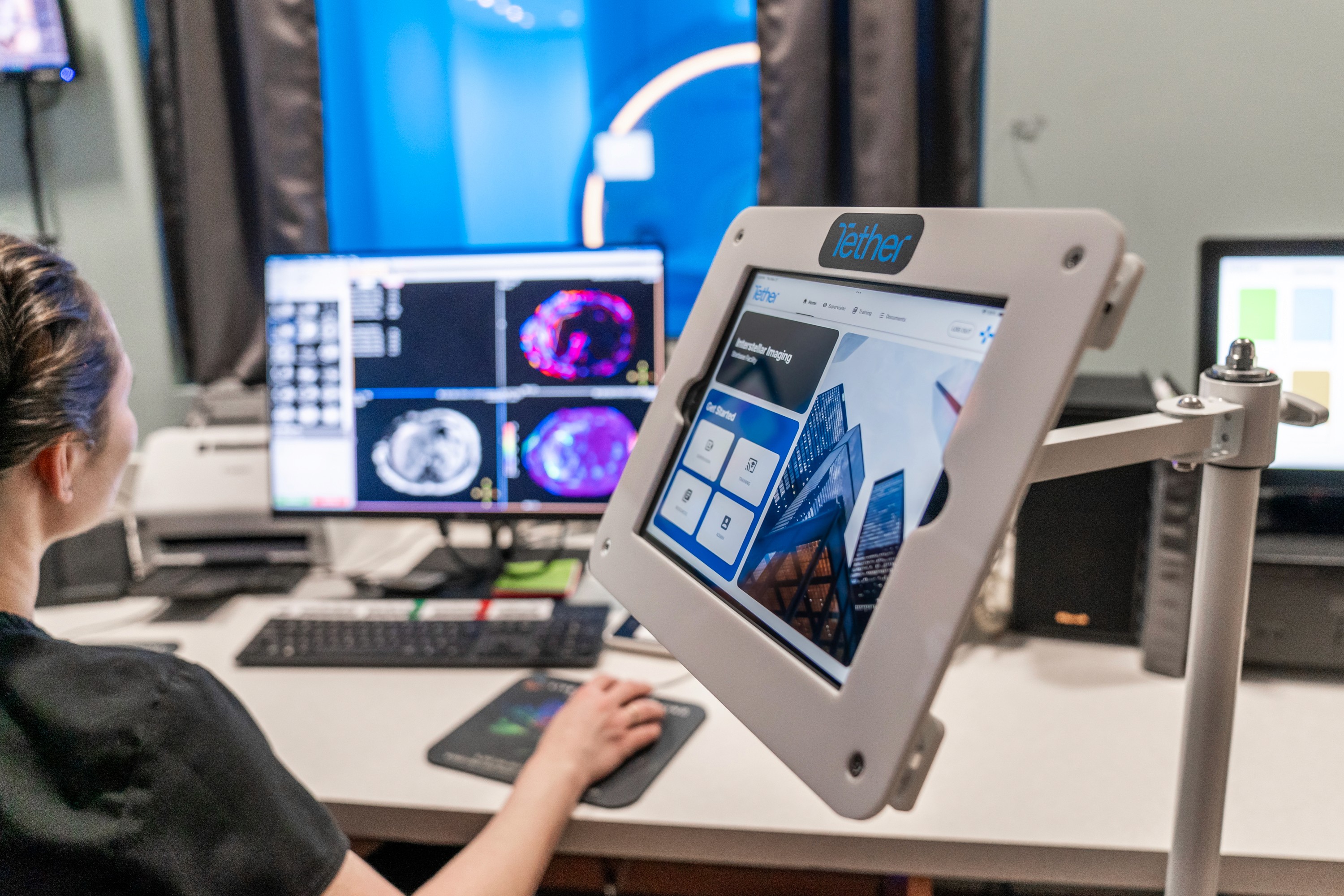
This is the exact pain point that Tether Supervision was created to address: ensuring consistent, compliant supervision availability even when practices cannot fully staff their diagnostic ranks, and doing so without adding burnout-driven pressure on existing radiologists.
Technology Steps In Where Staffing Cannot
The survey highlights that practices are increasingly relying on technology to offset labor gaps: AI-driven triage, cloud-based PACS, workflow automation, and advanced voice recognition. These tools expand a radiologist’s productivity but do not solve the supervision requirement for contrast-enhanced CT and MRI.
Supervision must be provided by a credentialed, immediately available physician, and many practices struggle to align this requirement with variable schedules and persistent vacancies. Technology improves throughput, but technology alone cannot satisfy supervision standards, a gap filled by purpose-built virtual supervision platforms.
Tether’s model directly supports this trend: pairing high-availability radiologists with secure, HIPAA-aligned audio-video supervision workflows, allowing practices to maintain exam volume without increasing administrative load or local staffing strain.
Recruitment and Retention Challenges Reinforce the Need for Flexible Supervision Models
More than 66% of respondents cite a limited candidate pool as their top recruitment barrier, while 46% note that on-site requirements deter candidates entirely. These constraints limit how practices can expand their contrast programs, add new service lines, or support multi-site operations.
Retention pressure is equally impactful. Evening and weekend shifts, often the times when contrast studies must continue for hospitals and busy outpatient centers, drive 48% of turnover concerns. Compensation challenges, work-life balance, and inability to staff hybrid models add further instability.
Virtual supervision offers a way for practices to protect imaging capacity even as traditional hiring becomes more difficult. By connecting centers to an available supervising radiologist through a dedicated, compliant platform, practices can reduce dependency on a shrinking on-site workforce and ensure that contrast access remains predictable.
Strategic Deployment of Extenders: Helpful, but Not a Complete Solution
The survey shows that practices increasingly use PAs, APRNs, and radiology assistants for low-level procedures, fluoroscopy injections, and consultations. These roles meaningfully expand capacity, but only 7% of practices involve extenders in any form of image interpretation, and none can independently satisfy contrast-supervision requirements.
This data reinforces a core operational truth: even with skilled extenders, radiologist availability remains the rate-limiting factor for contrast programs.
What This Means for Imaging Centers Today
When 94% of practices face shortages, and when burnout, compensation pressure, and rigid on-site expectations continue to drive turnover, the industry must adopt solutions that stabilize radiology operations without relying on a staffing pipeline that no longer exists.
For contrast programs specifically, sustainability now hinges on three realities shown clearly in the dataset:
On-site diagnostic coverage will remain volatile for the foreseeable future.
Remote work expands recruitment but introduces instability.
Technology offsets burden but cannot replace physician supervision requirements.
Virtual contrast supervision is positioned precisely at the intersection of these needs. Tether’s model supports practices in maintaining ACR-aligned workflows, meeting CMS supervision requirements, and delivering uninterrupted contrast-enhanced imaging, even when staffing conditions fluctuate week to week.
The August 2025 survey confirms what practices feel daily: the radiology workforce shortage is no longer a staffing issue, it is an operational risk factor. The practices that will thrive are those that combine modern hiring tactics with scalable technological and clinical support systems. As radiology groups rethink how to protect access, reduce burnout, and stabilize coverage, virtual supervision is emerging not as an experiment but as a foundational component of resilient imaging operations.
Tether Supervision was built for this moment, supporting imaging centers with reliable physician availability, documented safety workflows, and the flexibility required to sustain contrast programs despite national shortages.

Read more from Tether Supervision

The First Published High-Acuity Contrast Reaction Managed Through Virtual Contrast Supervision
American Society of Radiologic Technologists and Tether Supervision Partner to Develop Contrast Reaction Management Series for Radiologic Technologists