How Imaging Centers Can Ensure a Smooth Transition to Virtual Contrast Supervision

When imaging centers decide to implement virtual contrast supervision, success doesn’t come from technology alone. It comes from people: the technologists, administrators, and radiologists who bring those tools to life every day.At Tether, we’ve guided dozens of imaging centers through this transition. What we’ve seen again and again is that prepared and supported teams make all the difference.

Tether Supervision

Virtual Contrast Supervision
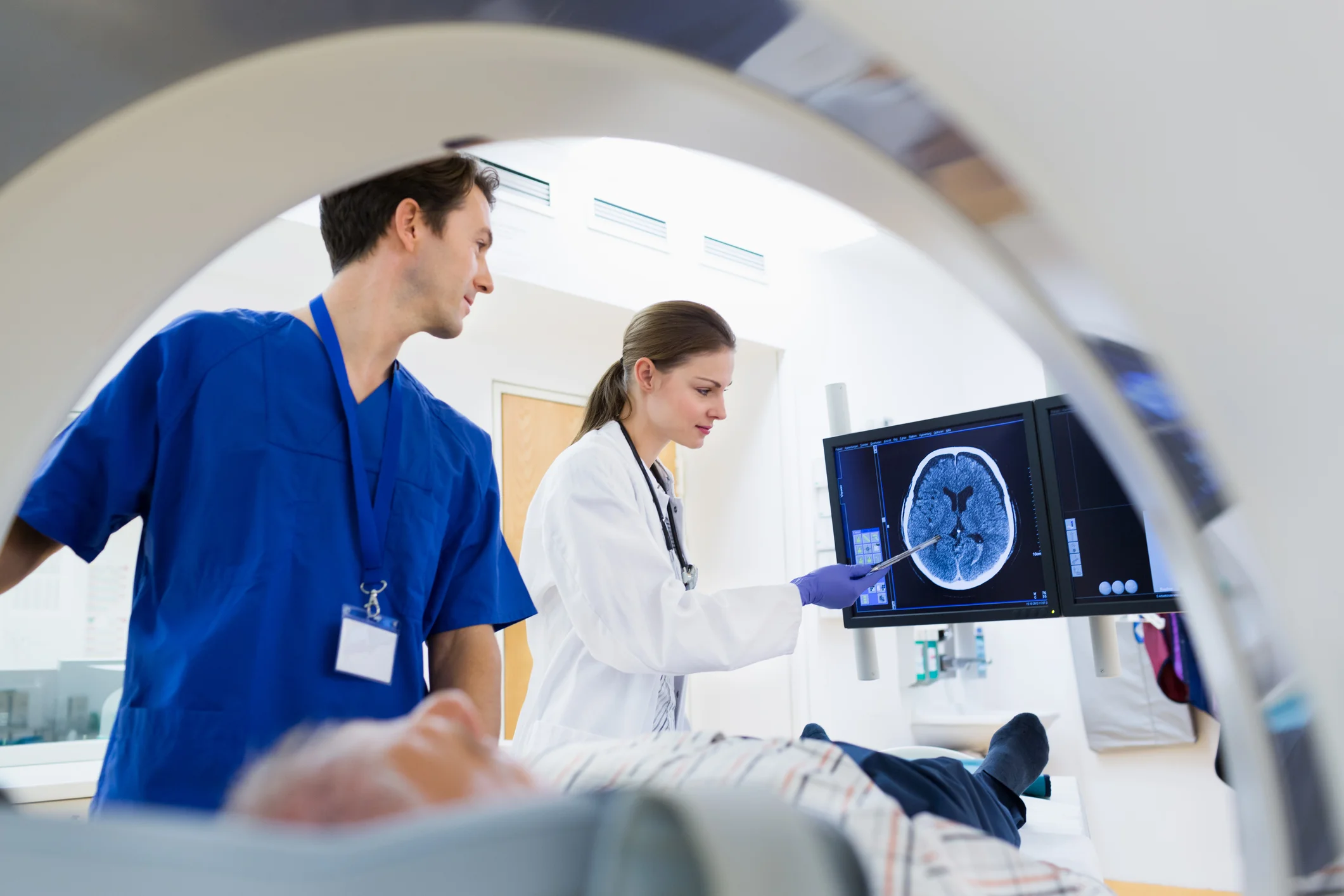
Steps for imaging centers to smoothly transition to virtual contrast supervision through clear planning, hands-on training, empowering onsite leaders, and maintaining open feedback.

Smooth transitions start on the ground.

When imaging centers decide to implement virtual contrast supervision or on-site contrast supervision, success doesn’t come from technology alone. It comes from people: the technologists, administrators, and radiologists who bring those tools to life every day.

At Tether, we’ve guided dozens of imaging centers through this transition. What we’ve seen again and again is that prepared and supported teams make all the difference.

Here are a few key lessons we’ve learned while helping frontline staff move from planning and kickoff to confident, live supervision.

1. Start with Clear Planning and Communication

Change can create uncertainty. The best antidote is transparency.

Before launching virtual supervision, successful centers:

  • Communicate the “why” — explaining how virtual oversight improves access, efficiency, and patient safety.

  • Share a clear timeline for rollout, with milestones staff can anticipate.

  • Involve technologists and onsite staff in early planning, so they feel ownership in the process rather than being handed a finished solution.

When teams understand what’s happening, and why it matters, adoption happens faster.

2. Invest in Hands-On Training

Technology and protocols are only as strong as the people using them. That’s why training is not optional; it’s the foundation.

We’ve found the most effective approach combines:

  • Scenario-based contrast reaction training (with ACR-aligned protocols)

  • Live demonstrations of the virtual supervision platform

  • Dry runs of patient workflows, including escalation drills

When technologists get the chance to rehearse responses in a safe environment, they build the confidence they’ll need when real situations arise.

3. Empower Onsite Leaders

Transitions go smoother when there’s a “go-to” person at the center. Identifying a lead technologist or site champion helps:

  • Reinforce best practices day-to-day

  • Answer quick workflow questions

  • Provide feedback to radiologists and administrators

We’ve seen this role accelerate adoption, bridge communication gaps, and keep teams motivated during rollout.

4. Pair Support with Accountability

A smooth transition doesn’t mean skipping accountability. Teams do best when they know they’re supported — and also when expectations are clear.

That means:

  • Setting consistent documentation requirements

  • Aligning on who escalates when issues arise

  • Reviewing early cases together to refine protocols

This balance keeps everyone on track without creating fear of failure.

5. Maintain Open Feedback Loops

The first few weeks of live supervision are critical. Successful centers keep the lines of communication wide open, asking technologists:

  • What’s working well?

  • What feels confusing or slow?

  • What additional support would help?

We recommend weekly check-ins during the first 30 days, followed by structured feedback at 60 and 90 days. This creates a rhythm of continuous improvement and ensures teams feel heard.

From Disruption to Upgrade

Virtual contrast supervision doesn’t have to feel like a disruption. With the right preparation, training, and ongoing support, it becomes an upgrade: a safer, more flexible way to deliver patient care.

At Tether, we’ve seen the difference: when frontline teams feel confident, radiologists feel supported, and patients receive timely care without compromise.

That’s not just a smooth transition. That’s lasting change.

Ready to learn more?

See how Tether Supervision helps imaging centers implement virtual contrast supervision with confidence, compliance, and safety built in. Contact us today.

Take the uncertainty out of contrast supervision.

We’ll support your team every step of the way, from onboarding and training to live supervision and ongoing quality improvement.

Take the uncertainty out of contrast supervision.

We’ll support your team every step of the way, from onboarding and training to live supervision and ongoing quality improvement.

Read more from Tether Supervision

Tether is the leading platform for virtual contrast supervision, built for speed, safety, and seamless imaging operations.

Expert perspectives on safe, efficient contrast workflows and clinical readiness.

Tether is the leading platform for virtual contrast supervision, built for speed, safety, and seamless imaging operations.

Radiology technologist operating CT imaging consoles alongside a Tether Supervision virtual contrast supervision unit, providing real-time radiologist oversight for safe, compliant contrast administration in outpatient imaging centers.

The First Published High-Acuity Contrast Reaction Managed Through Virtual Contrast Supervision
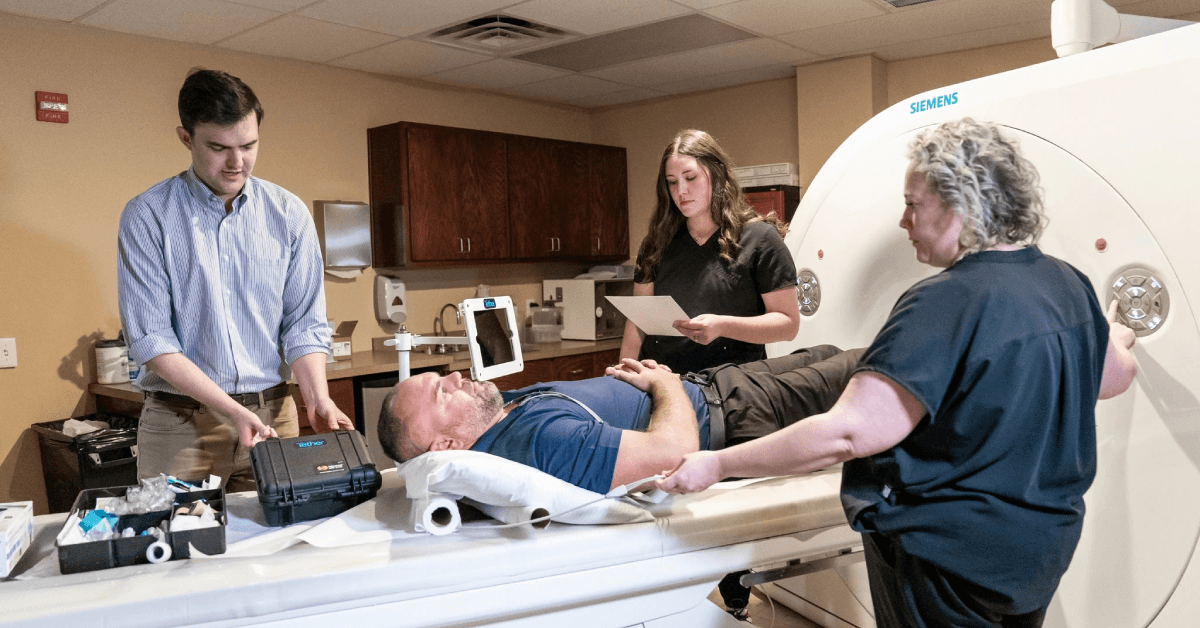
A severe reaction develops within minutes

A 63-year-old woman undergoing an outpatient CT pelvis with iodinated contrast developed pruritus and diffuse urticaria approximately two minutes after injection. Her condition deteriorated rapidly. She became pale and confused, with a blood pressure of 70/47 mmHg, oxygen saturation in the 70%–80% range, labored respirations, and signs concerning for upper-airway involvement. The clinical picture met accepted criteria for anaphylaxis.

The technologist stopped the scan, initiated the site’s emergency response protocol, and activated Tether Supervision’s emergency alert.

Physician engagement in approximately 20 seconds

A critical feature of the workflow was that the supervising physician was already connected to the imaging center through a persistent real-time audiovisual supervision session. When the technologist activated Tether’s emergency alert, the system immediately directed the physician’s attention to the correct site. Live video communication was established in approximately 20 seconds.

That distinction matters. In a high-acuity emergency, the workflow should not begin with trying to find a physician. The physician should already be available, and the system should be designed to immediately localize their attention to the patient who needs help.

Real-time management of anaphylaxis

Under remote physician guidance, the on-site team administered intramuscular epinephrine, initiated high-flow oxygen, and performed airway-positioning maneuvers. EMS was activated. When hypotension and respiratory compromise persisted, the physician directed a second dose of intramuscular epinephrine. A nasopharyngeal airway was placed, and oxygenation and blood pressure subsequently improved.

The supervising physician remained connected through EMS arrival and participated in the handoff. The patient was transported to the emergency department, where progressive laryngeal edema required intubation for airway protection. She was extubated the following day and discharged home two days later.

Virtual supervision is not just a video connection

One of the most important lessons from the case is that effective virtual contrast supervision depends on far more than teleconferencing technology. Before the event, the responding technologist had completed physician-led contrast-reaction management training provided by Tether Supervision and the imaging center. That training addressed reaction recognition, emergency escalation, and physician-directed interventions during acute events.

The article also emphasizes the importance of standardized epinephrine protocols, airway equipment, IV fluid capability, reliable audiovisual connectivity, and simulation-based training. That is exactly how Tether approaches virtual supervision: as a clinical operating system, not simply a remote physician on a screen.

Why academic rigor matters

Virtual contrast supervision is still an evolving model. As adoption expands, the industry will need more than claims, anecdotes, and internally produced content. It will need evidence.

That means documented clinical outcomes, transparent workflows, physician-led training, thoughtful protocol design, and peer-reviewed publication. This case report is a meaningful step in that direction. It was published in a medical journal and authored by physicians affiliated with McGovern Medical School, Stanford University, and the Uniformed Services University of the Health Sciences.

For Tether, that level of scrutiny is not incidental to the model. It is part of the model. Clinical services should be held to clinical standards.

Radiology technologist operating CT imaging consoles alongside a Tether Supervision virtual contrast supervision unit, providing real-time radiologist oversight for safe, compliant contrast administration in outpatient imaging centers.

American Society of Radiologic Technologists and Tether Supervision Partner to Develop Contrast Reaction Management Series for Radiologic Technologists
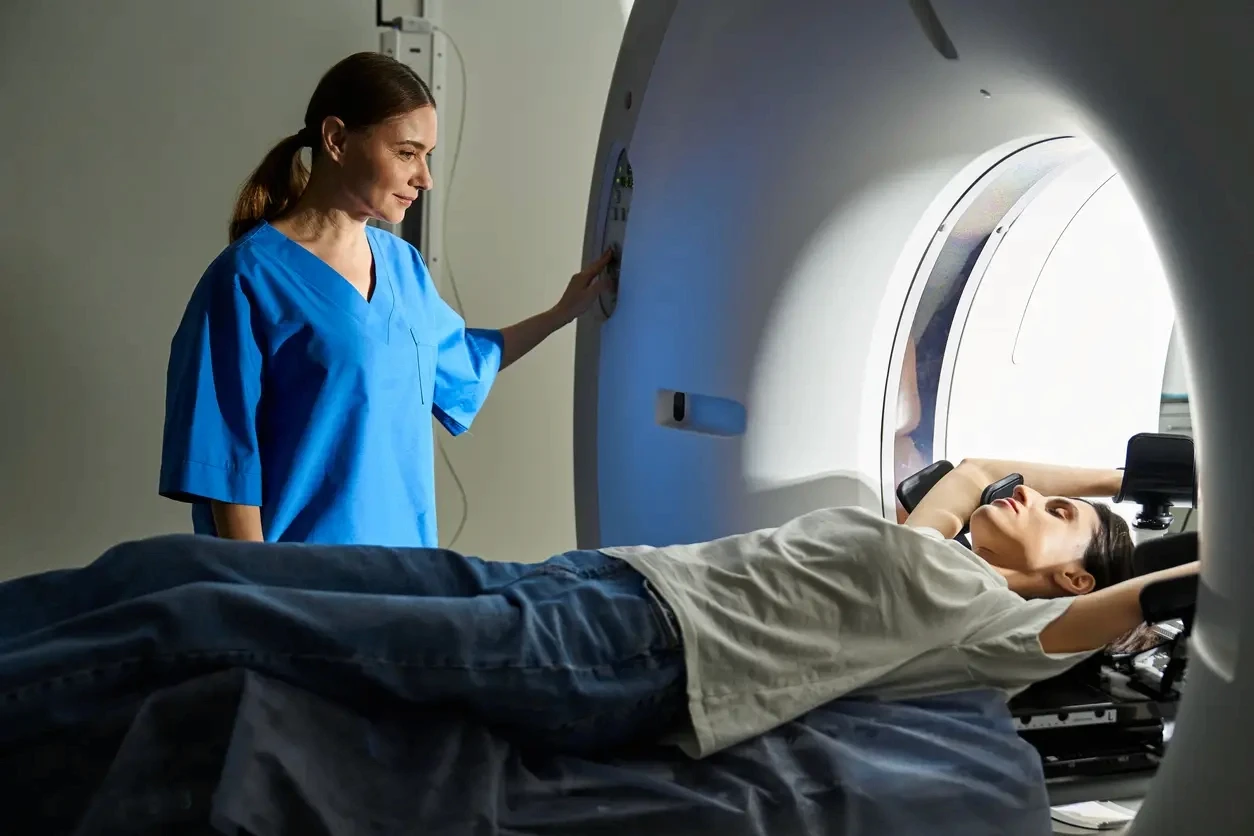
ALBUQUERQUE, N.M., and HOUSTON, Texas — [Month Day, 2026] — The American Society of Radiologic Technologists and Tether Supervision announced a strategic partnership to develop the Advanced Contrast Management Series, a comprehensive continuing education program designed to equip medical imaging and radiation therapy professionals with the skills to recognize, assess and respond to contrast-related adverse events with greater speed, consistency and clinical confidence. 

Within the collaboration, Tether Supervision will co-develop course content grounded in real-world outpatient imaging workflows, while ASRT will host the course in the ASRT Store

The program is designed to move beyond theoretical instruction and emphasize applied clinical readiness. Core modules will focus on structured contrast reaction classification and severity assessment, rapid patient evaluation, airway-breathing-circulation stabilization, focused clinical examination and closed-loop emergency communication. The series also addresses medication and equipment preparedness, along with standardized treatment pathways for high-acuity events, including anaphylaxis, bronchospasm, pulmonary edema, laryngeal edema, urticaria and extravasation. 

Training is delivered through practical, scenario-based clinical application, reinforcing rapid recognition, clear prioritization and decisive intervention under pressure, reflecting the realities of outpatient imaging settings where immediate response is critical.

“Medical imaging and radiation therapy professionals are on the front line of patient care during contrast-enhanced imaging, and when adverse reactions occur, preparation is critical,” said ASRT CEO Melissa B. Pergola, Ed.D., R.T.(R)(M), FASRT, CAE. “This collaboration reflects ASRT’s commitment to education that is practical, clinically relevant and focused on improving patient outcomes. By partnering with Tether Supervision, we will provide a program that translates high-acuity scenarios into clear, actionable training.”

“Effective contrast reaction management requires more than theory – it requires a repeatable operational framework for assessment, communication and intervention,” said Cory Wynn, chief executive officer of Tether Supervision. “Partnering with American Society of Radiologic Technologists allows us to combine field-tested supervision experience with a trusted educational platform, helping imaging teams build consistent readiness across every site and every shift.”

The CE series will draw on Tether Supervision’s established contrast reaction training framework and clinical leadership, including contributions from Sam Beger, M.D., M.P.H., board-certified emergency medicine physician with fellowship training in space medicine. His instruction emphasizes structured emergency response, rapid clinical assessment and consistent escalation protocols in high-risk scenarios.

The partnership aligns ASRT’s mission to advance and elevate the medical imaging and radiation therapy profession and enhance quality, safe patient care with Tether Supervision’s focus on expanding access to expert radiology supervision through standardized workflows, clinical rigor and modern technology.

Additional details regarding course availability, enrollment and launch timing will be announced in the coming months.

About ASRT
Founded in 1920, the American Society of Radiologic Technologists is the world’s largest and oldest membership association for medical imaging and radiation therapy professionals. ASRT is dedicated to advancing the medical imaging and radiation therapy profession and enhancing patient care through education, advocacy and professional development.

About Tether Supervision
Tether Supervision is a physician-led platform providing virtual and on-site direct supervision for contrast-enhanced CT and MRI across the United States. The company delivers an integrated clinical and technology infrastructure combining real-time audio-video supervision, structured workflows and operational oversight. Its system enables continuous physician availability, standardized escalation and documented response tracking, helping imaging centers improve safety, maintain regulatory compliance and scale access to care without compromising clinical quality.

Media Contacts
American Society of Radiologic Technologists
PR@asrt.org

Tether Supervision Media Relations
Press@tethersupervision.com

Radiology technologist operating CT imaging consoles alongside a Tether Supervision virtual contrast supervision unit, providing real-time radiologist oversight for safe, compliant contrast administration in outpatient imaging centers.

Retaining Human Touch in a High-Tech Specialty

Over the course of my career in radiology, I have watched this field evolve in extraordinary ways. I have lived through the digitization of images, the expansion of access, and the steady improvement of technology that has made radiology faster, sharper and more connected. That progress is real, and it has done a tremendous amount for patient care. We should celebrate it and continue building upon it. 

But the longer I have worked in and around imaging, the more convinced I have become of something simple: no matter how advanced radiology becomes, we cannot forget the patient at the center of it all. Patients may appreciate technology, but what they remember most is whether someone helped them feel informed, cared for and less alone.

Most of us can think of a time when we were sick, worried, or waiting for an answer, and one physician encounter made the experience a little less frightening. I think often about a moment like that involving my friend Dr. Rob Liddell. He took the time to call my wife, Rachel, and explain what the report meant in layman’s terms. He did not just repeat the language on the page. He translated it. He answered the questions that matter most to patients: What does this mean? How worried should I be? What are the next steps? That call changed the entire experience. It brought clarity where there had been confusion and reassurance where there had been anxiety.

Today, patients often see their radiology reports quickly through online portals, sometimes before they have had a meaningful conversation with the physician who ordered the study.  Radiology reports are written to be precise, but for patients they can also feel long, technical and intimidating. Communication is not some side issue in radiology; RSNA has noted that this shift is creating a new need for clearer communication and more direct engagement from radiologists.1,2

I have spent much of my career on the business and operational side of imaging, and from that vantage point I can say just as clearly that the humanity we bring each day is not a soft “extra”. It is part of quality. It is part of trust. It is part of loyalty. Patients may not always be able to judge the technical details of the equipment or an interpretation, but they absolutely remember how an experience made them feel. One national analysis of patient reviews found that the words most associated with positive radiologist reviews were “caring,” “knowledgeable” and “professional,” while negative reviews most often used words like “rude,” “pain” and “unprofessional.”3

I have seen that reality play out in imaging centers throughout my career. The centers that stand out are rarely defined by technology alone. They are the ones where the front desk welcomes people warmly, where staff members explain what is about to happen, where a smile is genuine, and where a patient leaves feeling that the team noticed the person and not just the exam. Those details are not cosmetic – they shape the care experience and determine whether people trust you enough to return.

That is why I am especially proud of what we are building at Tether Supervision. Even in a virtual supervision model, we have made it a priority to preserve the patient-centered interactions, alongside our imaging center partners. Virtual supervision should never mean distant care. When a patient has a difficult experience or needs added reassurance, they are face-to-face with one of our physicians.  In addition, every patient that has an incident receives a callback from one of our physicians within 48 hours to follow-up on their discharge and care.  We have heard story after story from our patients who were deeply appreciative simply because someone reached out, explained what happened, answered questions, and made clear that we cared.

A specific example really resonates with me.  We had a patient who experienced an anaphylactic reaction and ended up in the ICU. Later, when she needed imaging again, she returned to the same imaging center for a non-contrast study. This does not happen by coincidence or accident. She came back because of trust. She remembered the follow-up. She remembered that someone checked on her. She remembered that the care did not stop the moment the immediate event was over.

Experiences like this are not anecdotal – research helps explain why they matter. Studies of post-discharge phone calls have found meaningful improvements in patient satisfaction and in patients’ likelihood to recommend a care setting. In one emergency medicine study, patients who reported receiving a follow-up call were far more likely to give the highest recommendation rating than those who did not. Another study found that follow-up calls created more opportunities to clarify instructions and improve the overall discharge experience.4,5

Patients are also telling us that they want both convenience and confidence. A recent study of diagnostic imaging preferences found that patients value lower costs and shorter waits, but they also care about specialty radiologist interpretation, primary care recommendation, online scheduling, and strong service ratings.6

That feels exactly right to me. Innovation matters. Convenience matters. Efficiency matters. But the future of radiology cannot be just about speed, scale and sophistication. It also must be about connections – call centers, front desks, technologists, nurses, and physicians. We should absolutely keep embracing new technology. We should keep improving systems, workflows, and access. But we cannot let efficiency crowd out empathy.

At the end of the day, patients are not living inside our workflows. They are the reason for our work and are living inside uncertainty, anxiety, and fear. A kind voice over the phone, a physician who takes time to explain the report, a thoughtful callback after a hard experience, a team member who greets someone with warmth instead of haste — those things still matter enormously. In some cases, they are the difference between a stressful encounter and one that leaves a patient feeling steady, informed, and cared for.

Radiology has accomplished amazing things technologically. The opportunity now is to ensure our humanity keeps pace with our technology - and never falls behind it.  This responsibility belongs to every radiologist, every imaging center, and every system shaping the patient experience.


About Michael Douglas

Michael Douglas is Chief Revenue Officer at Tether Supervision and a veteran healthcare executive with over 20 years of leadership in outpatient imaging. He has served as CEO of SMIL (Southwest Medical Imaging, Ltd.) and held senior roles at Alliance HealthCare Services and Center for Diagnostic Imaging, where he led large-scale imaging operations, physician partnerships, and multi-state growth initiatives.


Selected References

1. McKee J. Radiologist-Patient Communication Skills in the Digital Age. RSNA News. October 25, 2023.

2. Silverberg M. The Key to Success in Radiology? Build Your Communication Skills. RSNA News. May 24, 2021.

3. Ginocchio LA, Duszak R Jr, Rosenkrantz AB. How Satisfied Are Patients With Their Radiologists? Assessment Using a National Patient Ratings Website. AJR Am J Roentgenol. 2017;208(5):W178-W183. doi:10.2214/AJR.16.17298.

4. Guss DA, Leland H, Castillo EM. The Impact of Post-Discharge Patient Call Back on Patient Satisfaction in Two Academic Emergency Departments. J Emerg Med. 2013;44(1):236-241. doi:10.1016/j.jemermed.2012.07.074.

5. Fagan SAK. Post-discharge Phone Calls in the Emergency Department: Do Follow-Up Calls Increase Patient Satisfaction and Reduce Post-Discharge Complications? Doctor of Nursing Practice Scholarly Projects. University of South Carolina. 2021.

6. van den Broek-Altenburg EM, Benson JS, Atherly AJ, DeStigter KK. Patient preferences for diagnostic imaging services: Decentralize or not? PLoS One. 2025;20(5):e0301404. doi:10.1371/journal.pone.0301404.