Retaining Human Touch in a High-Tech Specialty
Radiology has advanced rapidly, but patient experience remains the defining measure of quality. This piece argues that empathy, clear communication, and follow-up care are essential to building trust and delivering truly patient-centered imaging, even in a virtual supervision model.

Michael Douglas
Virtual Contrast Supervision
Over the course of my career in radiology, I have watched this field evolve in extraordinary ways. I have lived through the digitization of images, the expansion of access, and the steady improvement of technology that has made radiology faster, sharper and more connected. That progress is real, and it has done a tremendous amount for patient care. We should celebrate it and continue building upon it.
But the longer I have worked in and around imaging, the more convinced I have become of something simple: no matter how advanced radiology becomes, we cannot forget the patient at the center of it all. Patients may appreciate technology, but what they remember most is whether someone helped them feel informed, cared for and less alone.
Most of us can think of a time when we were sick, worried, or waiting for an answer, and one physician encounter made the experience a little less frightening. I think often about a moment like that involving my friend Dr. Rob Liddell. He took the time to call my wife, Rachel, and explain what the report meant in layman’s terms. He did not just repeat the language on the page. He translated it. He answered the questions that matter most to patients: What does this mean? How worried should I be? What are the next steps? That call changed the entire experience. It brought clarity where there had been confusion and reassurance where there had been anxiety.
Today, patients often see their radiology reports quickly through online portals, sometimes before they have had a meaningful conversation with the physician who ordered the study. Radiology reports are written to be precise, but for patients they can also feel long, technical and intimidating. Communication is not some side issue in radiology; RSNA has noted that this shift is creating a new need for clearer communication and more direct engagement from radiologists.1,2
I have spent much of my career on the business and operational side of imaging, and from that vantage point I can say just as clearly that the humanity we bring each day is not a soft “extra”. It is part of quality. It is part of trust. It is part of loyalty. Patients may not always be able to judge the technical details of the equipment or an interpretation, but they absolutely remember how an experience made them feel. One national analysis of patient reviews found that the words most associated with positive radiologist reviews were “caring,” “knowledgeable” and “professional,” while negative reviews most often used words like “rude,” “pain” and “unprofessional.”3
I have seen that reality play out in imaging centers throughout my career. The centers that stand out are rarely defined by technology alone. They are the ones where the front desk welcomes people warmly, where staff members explain what is about to happen, where a smile is genuine, and where a patient leaves feeling that the team noticed the person and not just the exam. Those details are not cosmetic – they shape the care experience and determine whether people trust you enough to return.
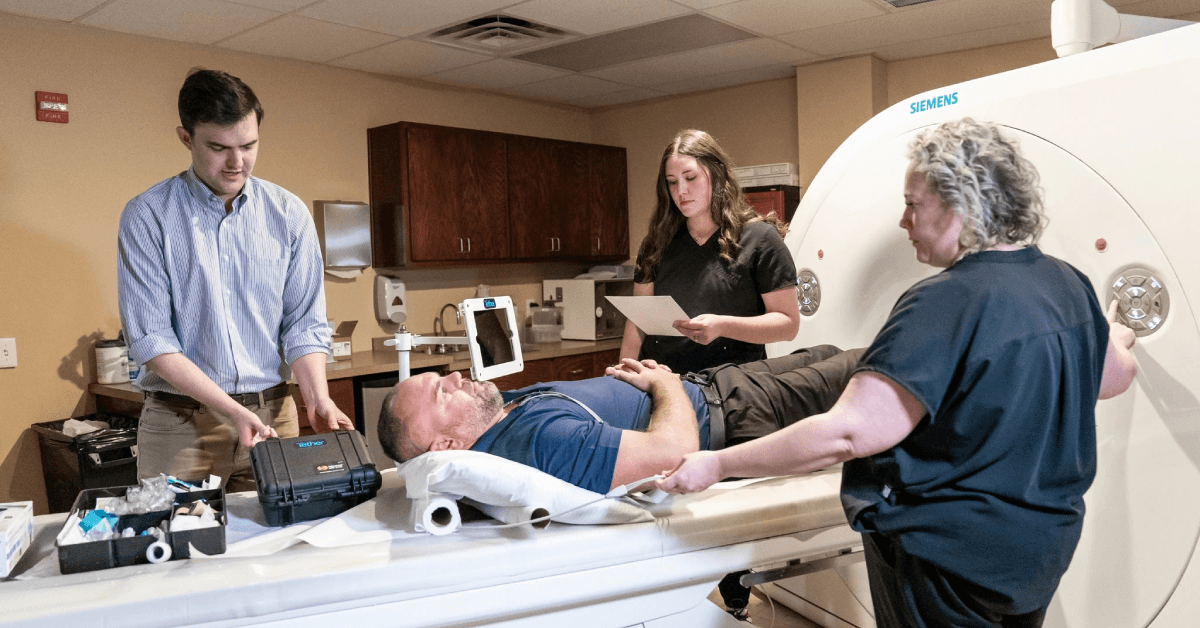
That is why I am especially proud of what we are building at Tether Supervision. Even in a virtual supervision model, we have made it a priority to preserve the patient-centered interactions, alongside our imaging center partners. Virtual supervision should never mean distant care. When a patient has a difficult experience or needs added reassurance, they are face-to-face with one of our physicians. In addition, every patient that has an incident receives a callback from one of our physicians within 48 hours to follow-up on their discharge and care. We have heard story after story from our patients who were deeply appreciative simply because someone reached out, explained what happened, answered questions, and made clear that we cared.
A specific example really resonates with me. We had a patient who experienced an anaphylactic reaction and ended up in the ICU. Later, when she needed imaging again, she returned to the same imaging center for a non-contrast study. This does not happen by coincidence or accident. She came back because of trust. She remembered the follow-up. She remembered that someone checked on her. She remembered that the care did not stop the moment the immediate event was over.
Experiences like this are not anecdotal – research helps explain why they matter. Studies of post-discharge phone calls have found meaningful improvements in patient satisfaction and in patients’ likelihood to recommend a care setting. In one emergency medicine study, patients who reported receiving a follow-up call were far more likely to give the highest recommendation rating than those who did not. Another study found that follow-up calls created more opportunities to clarify instructions and improve the overall discharge experience.4,5
Patients are also telling us that they want both convenience and confidence. A recent study of diagnostic imaging preferences found that patients value lower costs and shorter waits, but they also care about specialty radiologist interpretation, primary care recommendation, online scheduling, and strong service ratings.6
That feels exactly right to me. Innovation matters. Convenience matters. Efficiency matters. But the future of radiology cannot be just about speed, scale and sophistication. It also must be about connections – call centers, front desks, technologists, nurses, and physicians. We should absolutely keep embracing new technology. We should keep improving systems, workflows, and access. But we cannot let efficiency crowd out empathy.
At the end of the day, patients are not living inside our workflows. They are the reason for our work and are living inside uncertainty, anxiety, and fear. A kind voice over the phone, a physician who takes time to explain the report, a thoughtful callback after a hard experience, a team member who greets someone with warmth instead of haste — those things still matter enormously. In some cases, they are the difference between a stressful encounter and one that leaves a patient feeling steady, informed, and cared for.
Radiology has accomplished amazing things technologically. The opportunity now is to ensure our humanity keeps pace with our technology - and never falls behind it. This responsibility belongs to every radiologist, every imaging center, and every system shaping the patient experience.
About Michael Douglas
Michael Douglas is Chief Revenue Officer at Tether Supervision and a veteran healthcare executive with over 20 years of leadership in outpatient imaging. He has served as CEO of SMIL (Southwest Medical Imaging, Ltd.) and held senior roles at Alliance HealthCare Services and Center for Diagnostic Imaging, where he led large-scale imaging operations, physician partnerships, and multi-state growth initiatives.
Selected References
1. McKee J. Radiologist-Patient Communication Skills in the Digital Age. RSNA News. October 25, 2023.
2. Silverberg M. The Key to Success in Radiology? Build Your Communication Skills. RSNA News. May 24, 2021.
3. Ginocchio LA, Duszak R Jr, Rosenkrantz AB. How Satisfied Are Patients With Their Radiologists? Assessment Using a National Patient Ratings Website. AJR Am J Roentgenol. 2017;208(5):W178-W183. doi:10.2214/AJR.16.17298.
4. Guss DA, Leland H, Castillo EM. The Impact of Post-Discharge Patient Call Back on Patient Satisfaction in Two Academic Emergency Departments. J Emerg Med. 2013;44(1):236-241. doi:10.1016/j.jemermed.2012.07.074.
5. Fagan SAK. Post-discharge Phone Calls in the Emergency Department: Do Follow-Up Calls Increase Patient Satisfaction and Reduce Post-Discharge Complications? Doctor of Nursing Practice Scholarly Projects. University of South Carolina. 2021.
6. van den Broek-Altenburg EM, Benson JS, Atherly AJ, DeStigter KK. Patient preferences for diagnostic imaging services: Decentralize or not? PLoS One. 2025;20(5):e0301404. doi:10.1371/journal.pone.0301404.

Read more from Tether Supervision

If the Video Connection Fails: A Contrast Supervision Downtime Plan

The First Published High-Acuity Contrast Reaction Managed Through Virtual Contrast Supervision