Washington State Bill Signals a Major Shift in Radiologic Technologist Supervision: HB 2113
Historical update: Washington HB 2113 was subsequently signed into law. Read the March 2026 final-status article for the current implementation context.

Tether Supervision
Legal & Regulatory
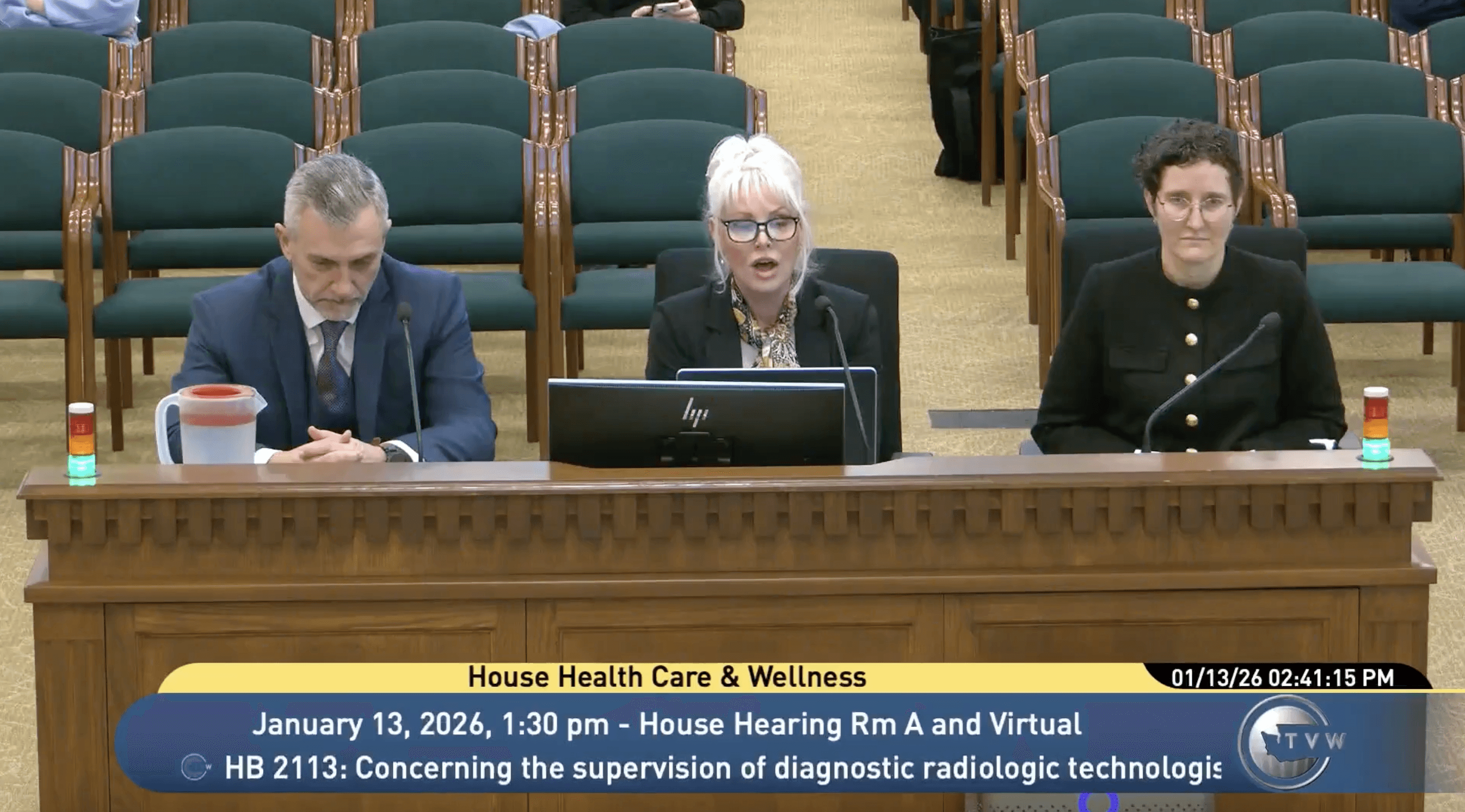
In January 2026, Washington State Representative Andrew Engell (R-Colville) introduced House Bill 2113, a proposal that would modernize how radiologic technologists are supervised when administering intravenous (IV) contrast and performing certain diagnostic and therapeutic procedures. While the bill is state-specific, its implications extend far beyond Washington, offering a clear signal of where supervision policy is heading nationwide.
At its core, HB 2113 seeks to align statutory language with real-world clinical practice, advances in technology, and long-standing workforce realities in radiology departments and outpatient imaging centers.
What HB 2113 Proposes
Under current Washington law, many radiologic procedures involving injections require direct, in-person physician supervision, even when the technologist is highly trained and experienced. HB 2113 would update that framework by allowing greater flexibility while preserving patient safety safeguards.
Specifically, the bill would permit:
• Diagnostic radiologic technologists
• Therapeutic radiologic technologists
• Magnetic resonance imaging (MRI) technologists
to administer IV contrast under one of the following supervision models:
Real-time, two-way audio and video supervision by a physician, or
Direct supervision by an Advanced Registered Nurse Practitioner (ARNP) or Physician Assistant (PA)
This approach reflects how many imaging departments already operate, particularly in high-volume hospital systems and rural or underserved areas.
Key Safeguards Built Into the Bill
Importantly, HB 2113 does not loosen standards indiscriminately. The proposed language is explicit about safety, scope, and accountability.
The bill requires that:
Virtual supervision must include live, interactive audio and video-audio-only supervision is not permitted
Appropriately trained clinical staff must be physically present at the facility to respond to adverse contrast reactions
All procedures must remain within the supervising practitioner’s licensed scope of practice
The bill does not permit unsupervised administration of contrast
Existing safety protocols and professional standards may not be bypassed or weakened
In other words, HB 2113 does not remove supervision, it modernizes how supervision is delivered.
Why This Matters: Codifying Existing Practice
Rep. Engell has emphasized that the bill is not radical, but corrective.
“It is a common-sense bill that codifies existing practice that has been deemed, first by a lawyer and then by the agency, to be out of compliance with the law.”
Across the country, imaging centers have increasingly relied on remote physician availability, advanced practice providers, and structured escalation protocols to manage contrast administration safely, particularly as radiologist shortages intensify and demand for imaging continues to rise.
In many cases, the law simply has not kept pace with clinical reality.
Workforce, Access, and Cost Implications
HB 2113 also addresses several practical challenges facing healthcare systems:
1. Radiologist Shortages
Requiring on-site physician presence for every contrast study is increasingly impractical, especially in rural hospitals and outpatient centers with limited staffing.
2. Operational Efficiency
Rigid supervision rules can lead to:
Delayed exams
Canceled studies
Underutilized scanners
Increased labor costs
Modern supervision models allow centers to maintain throughput without compromising safety.
3. Career Mobility for ARNPs and PAs
The bill formally recognizes what many hospitals already acknowledge: trained ARNPs and PAs are qualified to supervise contrast-enhanced CT and MRI studies within defined protocols.
As Rep. Engell noted, without statutory clarity, healthcare organizations incur unnecessary costs and providers lose opportunities they have held for decades.
Alignment With Broader National Trends
While HB 2113 is a Washington bill, it mirrors broader developments across the U.S.:
CMS has increasingly acknowledged virtual direct supervision in certain contexts when real-time interaction is available
States are revisiting radiologic technologist scope-of-practice statutes that were written long before modern telehealth and secure video platforms existed
Accrediting bodies and health systems are focusing less on where a supervisor is located and more on availability, responsiveness, and escalation readiness
Washington’s proposal reflects a growing consensus: patient safety is driven by structured oversight and rapid clinical response, not physical proximity alone.
What This Means for Imaging Centers
If enacted, HB 2113 would give imaging centers in Washington:
Greater flexibility in staffing models
Clear statutory authority for virtual physician supervision
Reduced risk of technical non-compliance
A framework that supports consistent, scalable operations
More broadly, it provides a blueprint other states may follow as they reassess supervision laws in light of modern clinical workflows.
HB 2113 represents a thoughtful evolution of radiologic supervision policy. Rather than lowering standards, the bill clarifies expectations and legitimizes supervision models that are already widely used and clinically accepted.
As more states confront similar pressures, legislation like HB 2113 underscores an important shift: the future of radiologic supervision is structured, accountable, and increasingly virtual by design, not by exception.
At Tether Supervision, we closely monitor state-level regulatory developments like HB 2113 as part of our commitment to compliant, high-reliability supervision models. Clear legislation enables imaging centers to adopt modern workflows with confidence, without compromising safety or care quality. For more information, see our updated virtual contrast supervision policy & regulation tracker.
For the enacted-law update, read Washington HB 2113 Signed: Virtual Supervision Now Law.


