Washington HB 2113 Signed: Virtual Supervision Now Law | What’s Next for DOH & Imaging Centers
HB 2113 has officially been signed into law in Washington State, marking a pivotal shift in radiologic technologist supervision. Here’s what imaging centers should expect next—and when virtual supervision can begin.

Tether Supervision
Legal & Regulatory

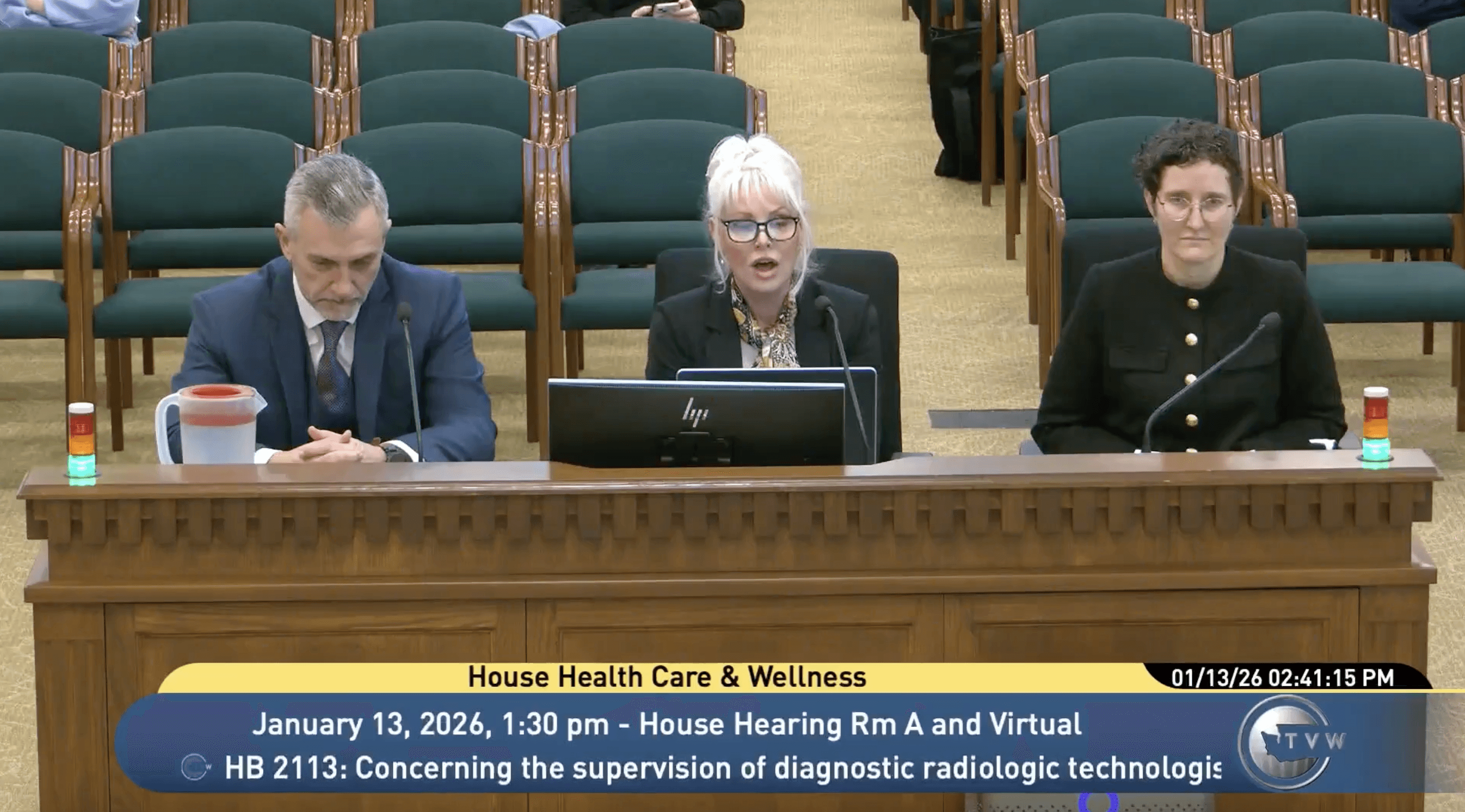
Washington State has officially taken a major step forward in modernizing radiologic technologist supervision. House Bill 2113 has now been signed into law following overwhelming bipartisan support, marking a meaningful shift in how imaging centers can deliver care, maintain access, and deploy physician resources. Earlier this year, we outlined the growing momentum behind this legislation and its potential impact on the industry. With the bill now enacted, the conversation shifts from possibility to implementation.
At its core, HB 2113 formally allows intravenous contrast procedures performed by radiologic technologists to be supervised through real-time, two-way audio and video technology. This effectively introduces virtual direct supervision into Washington law, aligning the state with permanent federal CMS policy and removing one of the most persistent operational constraints in outpatient imaging. In parallel, the bill expands on-site supervision options by allowing advanced practice registered nurses and physician assistants to supervise IV contrast procedures under direct supervision, addressing long-standing access challenges in emergency departments and rural settings. Importantly, the legislation maintains a clear expectation that trained clinical personnel and appropriate emergency response capabilities remain physically present at the facility, reinforcing that virtual supervision enhances—but does not replace—on-site patient care readiness.
The law is set to take effect 90 days after adjournment of the legislative session, placing practical implementation in mid-2026. At that point, the statute becomes controlling, and imaging centers will have a clear legal pathway to begin structuring compliant virtual supervision programs. However, the passage of the law is not the final step in the regulatory process. The Washington Department of Health will now play a critical role in aligning existing administrative rules with the new statute. Current Washington Administrative Code definitions of direct supervision still assume physical on-site physician presence, which is now partially outdated. As a result, DOH will need to undertake rulemaking to update supervision definitions, incorporate virtual supervision into formal guidance, and clarify operational expectations.
This rulemaking process typically unfolds over several phases, including initial guidance, proposed rule updates, public comment, and final adoption. In most cases, this takes six to twelve months or longer. As a result, a transitional period is expected where the statute permits virtual supervision, but formal DOH rules have not yet fully caught up. During this window, the statute governs, meaning imaging centers can move forward if they align closely with the law’s requirements and maintain strong clinical and compliance protocols.
In practice, some organizations will move quickly once the law becomes effective, leveraging the statutory authority to improve access, reduce delays, and stabilize operations. Others will take a more conservative approach, waiting for additional DOH clarification before implementing changes. Both approaches are understandable, but the underlying reality remains the same: the legal framework enabling virtual supervision will be in place as of mid-2026.
For imaging centers, HB 2113 enables more consistent coverage, reduces dependence on physical radiologist presence, and supports continued access to contrast-enhanced imaging—particularly in underserved or capacity-constrained environments. More broadly, it reflects a structural shift in how supervision is defined and delivered. Virtual supervision is no longer a temporary accommodation or regulatory exception; it is becoming a permanent and integrated component of modern imaging operations.
The passage of HB 2113 signals that Washington is now firmly aligned with this national transition. The remaining variable is not whether virtual supervision will be adopted, but how quickly organizations choose to implement it.
How Tether Can Support Your Virtual Supervision Program
Passing legislation is one thing. Implementing it safely and consistently across real clinical environments is something else entirely.
As imaging centers begin to evaluate what HB 2113 means for their operations, the real work starts at the intersection of policy, patient care, and day-to-day workflow. Virtual supervision is not just a technology shift—it’s a care delivery model. And it only works if every piece is aligned.
That’s where Tether Supervision comes in.
We’ve built our model specifically around contrast supervision in real-world imaging environments. Our radiologists are trained not just to “be available,” but to actively supervise—providing immediate, clear, and confident guidance during procedures, and stepping in decisively when it matters most. In the rare event of a contrast reaction, response time, communication clarity, and clinical leadership are everything. That’s the standard we operate to.
On the platform side, we’ve designed a system that fits seamlessly into the imaging center workflow. It’s simple to deploy, reliable under pressure, and structured around how teams actually operate—not how software thinks they should. Sessions are initiated quickly, communication is continuous, and escalation pathways are built in. No complexity, no friction, no ambiguity about who is responsible.
But the most overlooked piece—and often the most important—is training. Virtual supervision only works when technologists feel confident and supported. We spend significant time upfront ensuring teams are fully prepared, from contrast protocols to emergency response workflows to mock scenarios. That preparation shows up when it matters most—during real patient care.
Ultimately, HB 2113 creates the opportunity. Execution is what determines whether that opportunity translates into better access, safer care, and more stable operations.
Our role is to make that transition straightforward, so imaging centers can adopt virtual supervision not just compliantly, but confidently.
Key Takeaways
HB 2113 is now law. Washington has formally authorized virtual direct supervision for IV contrast procedures using real-time audio and video technology.
Effective mid-2026. The statute becomes operative approximately 90 days after legislative adjournment, establishing a clear legal pathway for implementation.
DOH rulemaking is the next step. The Department of Health is expected to update administrative rules to align with the new statute, a process that may take 6–12+ months.
Statute governs in the interim. Imaging centers may begin implementing compliant virtual supervision programs once the law is effective, even as DOH guidance evolves.
On-site clinical readiness remains required. Facilities must continue to maintain trained personnel and emergency response capabilities at the point of care.
Adoption will vary. Some organizations will move quickly to capture operational and access benefits, while others may wait for additional regulatory clarity.