What the RadSite Panel Revealed About the Future of Virtual Supervision for IV Contrast in CT & MRI

Insights from the RadSite panel featuring Tether’s Dr. Sam Beger on how virtual supervision is improving safety, compliance, and access for IV contrast administration in CT and MRI imaging.

Samuel Beger, M.D., M.P.H

Mar 13, 2026

Virtual Contrast Supervision

I recently had the opportunity to join the RadSite panel discussion on March 11, 2026, focused on the impact of virtual supervision and remote scanning on administration of IV contrast in CT and MRI imaging.

It was a valuable conversation because it addressed a question more imaging leaders are now asking: Is virtual supervision simply an operational workaround, or is it actually a better model for patient safety, access, and consistency?

The panel, which included Eliot Siegel, MD (RadSite), myself (Sam Beger, MD, MPH) (Tether Supervision), Michael Coords, MD (RadNet), Laura Foster, MPH, JD (Former SVP Compliance, RadNet), and Dor Shoshan, MD (ContrastConnect), shared a clear consensus:

When virtual supervision is implemented correctly, it is not a downgrade from traditional on-site coverage. In many cases, it promotes a stronger, faster, and more standardized model for contrast supervision in outpatient imaging.

At Tether Supervision, this is exactly how we approach it.

The conversation has changed

For years, the imaging industry treated direct supervision as something tied almost entirely to physical presence. If a physician was somewhere on-site and could be located when needed, that was often viewed as sufficient.

However, that framework was shaped by older limitations. It came from a time before always-on, secure, two-way audiovisual communication. Before purpose-built workflows. Before modern escalation systems. Before many centers had practical ways to extend physician coverage across distributed outpatient sites without compromising responsiveness.

This is no longer the environment we operate in. Today, imaging centers need to balance growing scan volume, staffing constraints, broader geographic footprints, patient expectations, and increasing pressure to maintain compliant, high-quality operations. When physician coverage constraints reduce contrast hours or delay exams, patients face longer wait times, less scheduling flexibility, and slower paths to diagnosis. The question is no longer whether care models can evolve. The question is whether they can evolve without sacrificing safety.

That is where virtual supervision matters. 

Across the country, regulators are also beginning to recognize that modern imaging operations require more flexible supervision models. Recent legislative and regulatory efforts in states such as California, Tennessee, and Washington reflect a growing understanding that physician oversight can be delivered effectively through secure real-time communication rather than relying solely on physical presence.

Direct supervision can still be truly direct

One of the most important points from the RadSite panel was this: Virtual supervision is direct supervision.

Direct supervision today can be provided through live, two-way audio-video communication, with the supervising physician immediately available during the performance of the procedure.

That last part is the key.

At Tether, we do not define “immediate” loosely. We believe immediate availability should be measured in seconds, not minutes. That standard matters because contrast reactions do not wait for someone to walk down a hallway, step back into a room, or finish another task. In a well-designed virtual supervision environment, the technologist can reach the supervising physician instantly, without leaving the patient, without hunting anyone down, and without introducing avoidable delays into an emergency response.

Why this matters for CT and MRI contrast administration

The administration of IV contrast in CT and MRI has always required more than a box-checking approach to supervision.

It requires:

  • rapid physician availability

  • clear escalation pathways

  • trained on-site staff

  • defined emergency response protocols

  • reliable communication

  • clinical judgment for higher-risk patients

  • strong documentation and follow-up

The old model often assumed those elements were present simply because a physician was physically nearby. However, proximity and preparedness are not the same thing.

At Tether, we built our model around the idea that supervision should be active, structured, and patient-centered, not passive.

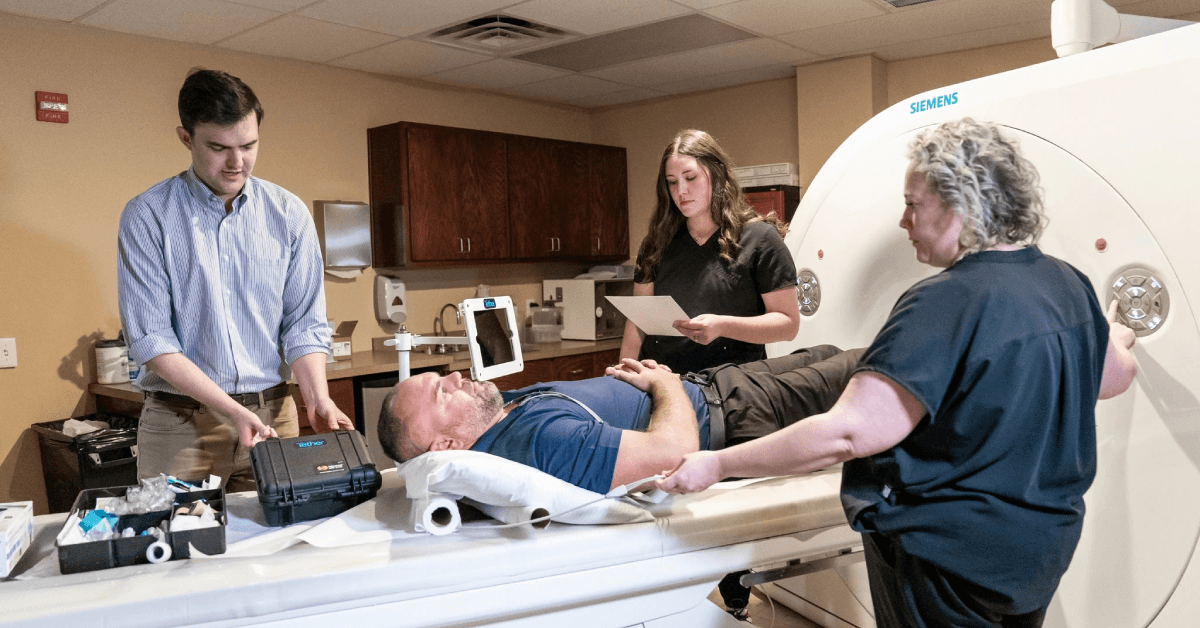
That means our physicians are not just “available somewhere.” They are engaged through a dedicated workflow designed specifically for outpatient imaging environments.

What good virtual supervision actually looks like

There is a lot of loose language in the market around remote supervision, tele-supervision, and virtual coverage. Not all models are built the same.

At Tether, we believe safe virtual supervision requires a complete operating framework.

That includes:

1. Always-on physician availability

Our model is designed so the supervising physician is continuously connected and immediately reachable throughout the operating day. This is not a loose callback system. It is real-time coverage built for real clinical workflows.

2. Two-way audiovisual communication

The technologist must be able to see and communicate with the physician, and the physician must be able to assess the situation directly. In many cases, that also means speaking with the patient, not just relaying information secondhand.

3. Site-specific onboarding and training

Virtual supervision only works if the on-site team knows exactly what to do. We place significant emphasis on training, preparation, and workflow alignment so that response is coordinated rather than improvised.

4. Emergency readiness

Crash carts, medication placement, escalation protocols, and EMS thresholds cannot be vague. They have to be standardized, understood, and reinforced.

5. Backup systems and redundancy

Connectivity issues happen. Simultaneous needs can happen. Any serious virtual supervision model must account for that in advance. Reliability is not optional.

6. Patient-centered follow-through

The physician’s role is not limited to a technical compliance function. It includes clear communication, documentation, and appropriate follow-up after the event.

This is the difference between simply offering “remote access” and actually delivering a high-trust supervision program.

Why training is one of the biggest advantages

One point raised during the panel deserves more attention across the imaging industry:

Repetition builds readiness.

Many physicians working in traditional on-site coverage models may rarely encounter a significant contrast reaction. Even if they are fully qualified, infrequent exposure can create variability in how events are recognized and managed.

In contrast, a dedicated virtual supervision model allows physicians and teams to work within a standardized system repeatedly. That repetition matters. It improves consistency. It sharpens judgment. It strengthens communication between the physician and the technologist. And it creates a more dependable response when something actually happens.

At Tether, we believe training cannot be occasional or symbolic.

It should always encompass:

  • hands-on site orientation

  • recurrent workflow reinforcement

  • mock codes

  • onboarding for new personnel

  • clearly defined emergency criteria

  • post-event learning and quality improvement

Remote scanning and virtual supervision are part of the same shift

The RadSite discussion also highlighted the connection between remote scanning and virtual supervision.

These are not identical functions, but they reflect the same broader transition in imaging: the move toward deploying specialized expertise more efficiently across multiple sites without sacrificing quality.

That matters for rural access. It matters for network growth. It matters for subspecialty protocols. And it matters for outpatient centers trying to expand capacity while maintaining clinical oversight. The common denominator is structured access to expertise.

When implemented correctly, both remote scanning and virtual supervision can help imaging providers deliver more consistent care across a broader footprint.

Regulation is moving, but operations matter most

The regulatory environment is evolving, and that is important. Federal reimbursement policy has moved. More states are reassessing outdated assumptions. More organizations are recognizing that technology-enabled supervision can support high-quality care.

But regulation alone does not create excellence.

A center can be technically “allowed” to do something and still do it poorly.

That is why imaging leaders should not ask only whether virtual supervision is permitted. They should ask whether their model is defensible, repeatable, and built around real patient safety.

They should ask:

  • How fast is physician response in practice?

  • Can the physician assess the patient directly?

  • What happens if multiple issues arise at once?

  • Are staff trained and retrained?

  • Are emergency workflows clear?

  • Are new team members onboarded correctly?

  • Is the system consistent across centers?

Those are the questions that separate a compliance posture from a true care model.

Tether’s perspective

At Tether Supervision, we believe virtual supervision should raise the bar, not lower it.

We built Tether around a simple idea:

If virtual supervision is going to be the future of outpatient contrast operations, it should be more responsive, more standardized, and more patient-centered than what came before it, whether delivered on-site, in person or virtually in real-time.

That means:

  • immediate physician access

  • rigorous workflows

  • strong training culture

  • real clinical accountability

  • thoughtful implementation at the site level

  • a model designed for both safety and scalability

The future of contrast supervision

The imaging industry is at an inflection point. Demand is growing. Staffing is tight. Outpatient imaging continues to expand. And the traditional assumptions around supervision no longer match the tools and expectations of modern care delivery.

The organizations that lead in this next phase will not be the ones that simply adopt a virtual platform. They will be the ones that build a supervision model with the discipline to support it.

That is where the real opportunity is. To build a safer, smarter standard for CT and MRI contrast administration.

Curious to learn more? You can watch the full RadSite Webinar on YouTube here.

About Tether Supervision

Tether Supervision helps imaging centers deliver compliant, responsive, and patient-centered virtual physician supervision for contrast-enhanced imaging. Our model is designed to support safe IV contrast administration workflows, strengthen emergency readiness, improve operational consistency, and help centers expand access without compromising care.

Take the uncertainty out of contrast supervision.

We’ll support your team every step of the way, from onboarding and training to live supervision and ongoing quality improvement.

Take the uncertainty out of contrast supervision.

We’ll support your team every step of the way, from onboarding and training to live supervision and ongoing quality improvement.

Read more from Tether Supervision

Tether is the leading platform for virtual contrast supervision, built for speed, safety, and seamless imaging operations.

Expert perspectives on safe, efficient contrast workflows and clinical readiness.

Tether is the leading platform for virtual contrast supervision, built for speed, safety, and seamless imaging operations.

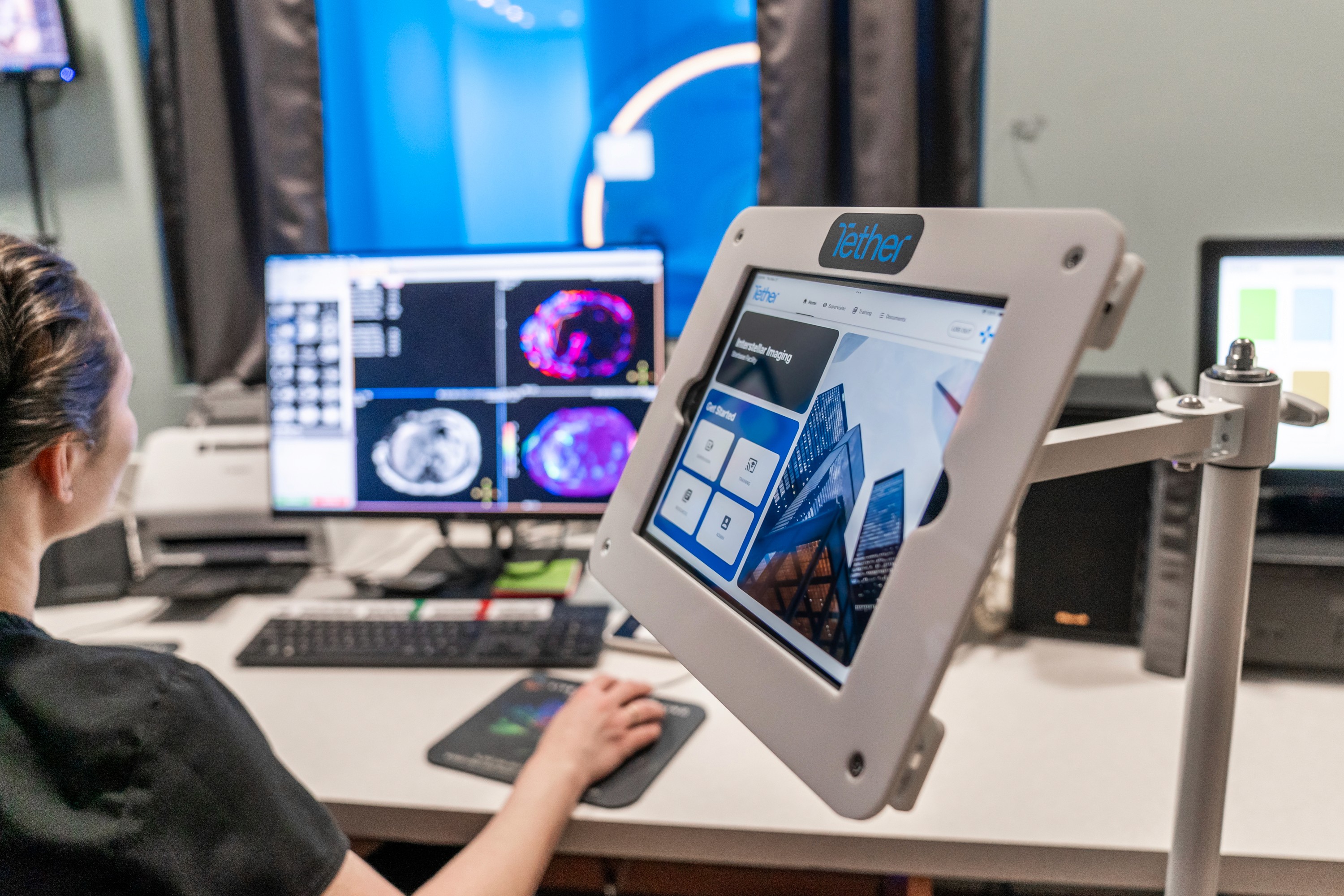
Radiology technologist operating CT imaging consoles alongside a Tether Supervision virtual contrast supervision unit, providing real-time radiologist oversight for safe, compliant contrast administration in outpatient imaging centers.

Radiology’s Workforce Crisis Is Escalating. Why Virtual Contrast Supervision Is Becoming a Core Stability Strategy

Radiology practices across the United States are entering 2026 facing the same acute pressure point: workforce shortages that are no longer episodic but structural. According to the national RBMA Hot Topics August 2025 survey data, 94% of radiology practices reported staffing shortages in the past year, with the most severe gaps concentrated in on-site diagnostic radiology, breast imaging day shifts, and remote overnight coverage. This combination of high demand, limited supply, and a widening experience gap is reshaping how practices think about coverage, workflow, and sustainable growth.

Against this backdrop, the rise of virtual contrast supervision has become a strategic operational tool. While the survey data does not address virtual supervision directly, its implications are unavoidable: practices are innovating around coverage because the traditional staffing model can no longer support reliable contrast-enhanced imaging seven days a week.

The Landscape: A Nearly Universal Shortage

The data paints a clear picture. On-site diagnostic radiology roles remain the hardest to fill, followed closely by breast day shifts and remote overnights, subspecialties that traditionally support high-volume CT and MRI services. When these positions go unfilled, contrast-enhanced imaging is often the first area to be disrupted, because contrast administration requires real-time availability of a credentialed supervising physician. Delays, rescheduling, and reduced service lines quickly follow.

This strain is magnified by the survey’s finding that workload and burnout drive 76% of retention challenges. Even in practices with strong recruitment pipelines, keeping radiologists long enough to stabilize operations is becoming its own challenge.

Remote Work Helps Recruitment, but Not Stability

Two-thirds of practices now enable off-site reading to expand their recruitment reach. Yet 34% report higher turnover among teleradiologists compared to on-site staff. That tension, remote work attracts talent but makes it harder to retain, reflects a deeper operational fragility. Practices that depend on remote radiologists to maintain contrast supervision coverage often face last-minute staffing gaps and unpredictable interruptions in service continuity.

This is the exact pain point that Tether Supervision was created to address: ensuring consistent, compliant supervision availability even when practices cannot fully staff their diagnostic ranks, and doing so without adding burnout-driven pressure on existing radiologists.

Technology Steps In Where Staffing Cannot

The survey highlights that practices are increasingly relying on technology to offset labor gaps: AI-driven triage, cloud-based PACS, workflow automation, and advanced voice recognition. These tools expand a radiologist’s productivity but do not solve the supervision requirement for contrast-enhanced CT and MRI.

Supervision must be provided by a credentialed, immediately available physician, and many practices struggle to align this requirement with variable schedules and persistent vacancies. Technology improves throughput, but technology alone cannot satisfy supervision standards, a gap filled by purpose-built virtual supervision platforms.

Tether’s model directly supports this trend: pairing high-availability radiologists with secure, HIPAA-aligned audio-video supervision workflows, allowing practices to maintain exam volume without increasing administrative load or local staffing strain.

Recruitment and Retention Challenges Reinforce the Need for Flexible Supervision Models

More than 66% of respondents cite a limited candidate pool as their top recruitment barrier, while 46% note that on-site requirements deter candidates entirely. These constraints limit how practices can expand their contrast programs, add new service lines, or support multi-site operations.

Retention pressure is equally impactful. Evening and weekend shifts, often the times when contrast studies must continue for hospitals and busy outpatient centers, drive 48% of turnover concerns. Compensation challenges, work-life balance, and inability to staff hybrid models add further instability.

Virtual supervision offers a way for practices to protect imaging capacity even as traditional hiring becomes more difficult. By connecting centers to an available supervising radiologist through a dedicated, compliant platform, practices can reduce dependency on a shrinking on-site workforce and ensure that contrast access remains predictable.

Strategic Deployment of Extenders: Helpful, but Not a Complete Solution

The survey shows that practices increasingly use PAs, APRNs, and radiology assistants for low-level procedures, fluoroscopy injections, and consultations. These roles meaningfully expand capacity, but only 7% of practices involve extenders in any form of image interpretation, and none can independently satisfy contrast-supervision requirements.

This data reinforces a core operational truth: even with skilled extenders, radiologist availability remains the rate-limiting factor for contrast programs.

What This Means for Imaging Centers Today

When 94% of practices face shortages, and when burnout, compensation pressure, and rigid on-site expectations continue to drive turnover, the industry must adopt solutions that stabilize radiology operations without relying on a staffing pipeline that no longer exists.

For contrast programs specifically, sustainability now hinges on three realities shown clearly in the dataset:

  • On-site diagnostic coverage will remain volatile for the foreseeable future.

  • Remote work expands recruitment but introduces instability.

  • Technology offsets burden but cannot replace physician supervision requirements.

Virtual contrast supervision is positioned precisely at the intersection of these needs. Tether’s model supports practices in maintaining ACR-aligned workflows, meeting CMS supervision requirements, and delivering uninterrupted contrast-enhanced imaging, even when staffing conditions fluctuate week to week.

The August 2025 survey confirms what practices feel daily: the radiology workforce shortage is no longer a staffing issue, it is an operational risk factor. The practices that will thrive are those that combine modern hiring tactics with scalable technological and clinical support systems. As radiology groups rethink how to protect access, reduce burnout, and stabilize coverage, virtual supervision is emerging not as an experiment but as a foundational component of resilient imaging operations.

Tether Supervision was built for this moment, supporting imaging centers with reliable physician availability, documented safety workflows, and the flexibility required to sustain contrast programs despite national shortages.

Steps for imaging centers to smoothly transition to virtual contrast supervision through clear planning, hands-on training, empowering onsite leaders, and maintaining open feedback.

How Imaging Centers Can Ensure a Smooth Transition to Virtual Contrast Supervision

Smooth transitions start on the ground.

When imaging centers decide to implement virtual contrast supervision or on-site contrast supervision, success doesn’t come from technology alone. It comes from people: the technologists, administrators, and radiologists who bring those tools to life every day.

At Tether, we’ve guided dozens of imaging centers through this transition. What we’ve seen again and again is that prepared and supported teams make all the difference.

Here are a few key lessons we’ve learned while helping frontline staff move from planning and kickoff to confident, live supervision.

1. Start with Clear Planning and Communication

Change can create uncertainty. The best antidote is transparency.

Before launching virtual supervision, successful centers:

  • Communicate the “why” — explaining how virtual oversight improves access, efficiency, and patient safety.

  • Share a clear timeline for rollout, with milestones staff can anticipate.

  • Involve technologists and onsite staff in early planning, so they feel ownership in the process rather than being handed a finished solution.

When teams understand what’s happening, and why it matters, adoption happens faster.

2. Invest in Hands-On Training

Technology and protocols are only as strong as the people using them. That’s why training is not optional; it’s the foundation.

We’ve found the most effective approach combines:

  • Scenario-based contrast reaction training (with ACR-aligned protocols)

  • Live demonstrations of the virtual supervision platform

  • Dry runs of patient workflows, including escalation drills

When technologists get the chance to rehearse responses in a safe environment, they build the confidence they’ll need when real situations arise.

3. Empower Onsite Leaders

Transitions go smoother when there’s a “go-to” person at the center. Identifying a lead technologist or site champion helps:

  • Reinforce best practices day-to-day

  • Answer quick workflow questions

  • Provide feedback to radiologists and administrators

We’ve seen this role accelerate adoption, bridge communication gaps, and keep teams motivated during rollout.

4. Pair Support with Accountability

A smooth transition doesn’t mean skipping accountability. Teams do best when they know they’re supported — and also when expectations are clear.

That means:

  • Setting consistent documentation requirements

  • Aligning on who escalates when issues arise

  • Reviewing early cases together to refine protocols

This balance keeps everyone on track without creating fear of failure.

5. Maintain Open Feedback Loops

The first few weeks of live supervision are critical. Successful centers keep the lines of communication wide open, asking technologists:

  • What’s working well?

  • What feels confusing or slow?

  • What additional support would help?

We recommend weekly check-ins during the first 30 days, followed by structured feedback at 60 and 90 days. This creates a rhythm of continuous improvement and ensures teams feel heard.

From Disruption to Upgrade

Virtual contrast supervision doesn’t have to feel like a disruption. With the right preparation, training, and ongoing support, it becomes an upgrade: a safer, more flexible way to deliver patient care.

At Tether, we’ve seen the difference: when frontline teams feel confident, radiologists feel supported, and patients receive timely care without compromise.

That’s not just a smooth transition. That’s lasting change.

Ready to learn more?

See how Tether Supervision helps imaging centers implement virtual contrast supervision with confidence, compliance, and safety built in. Contact us today.