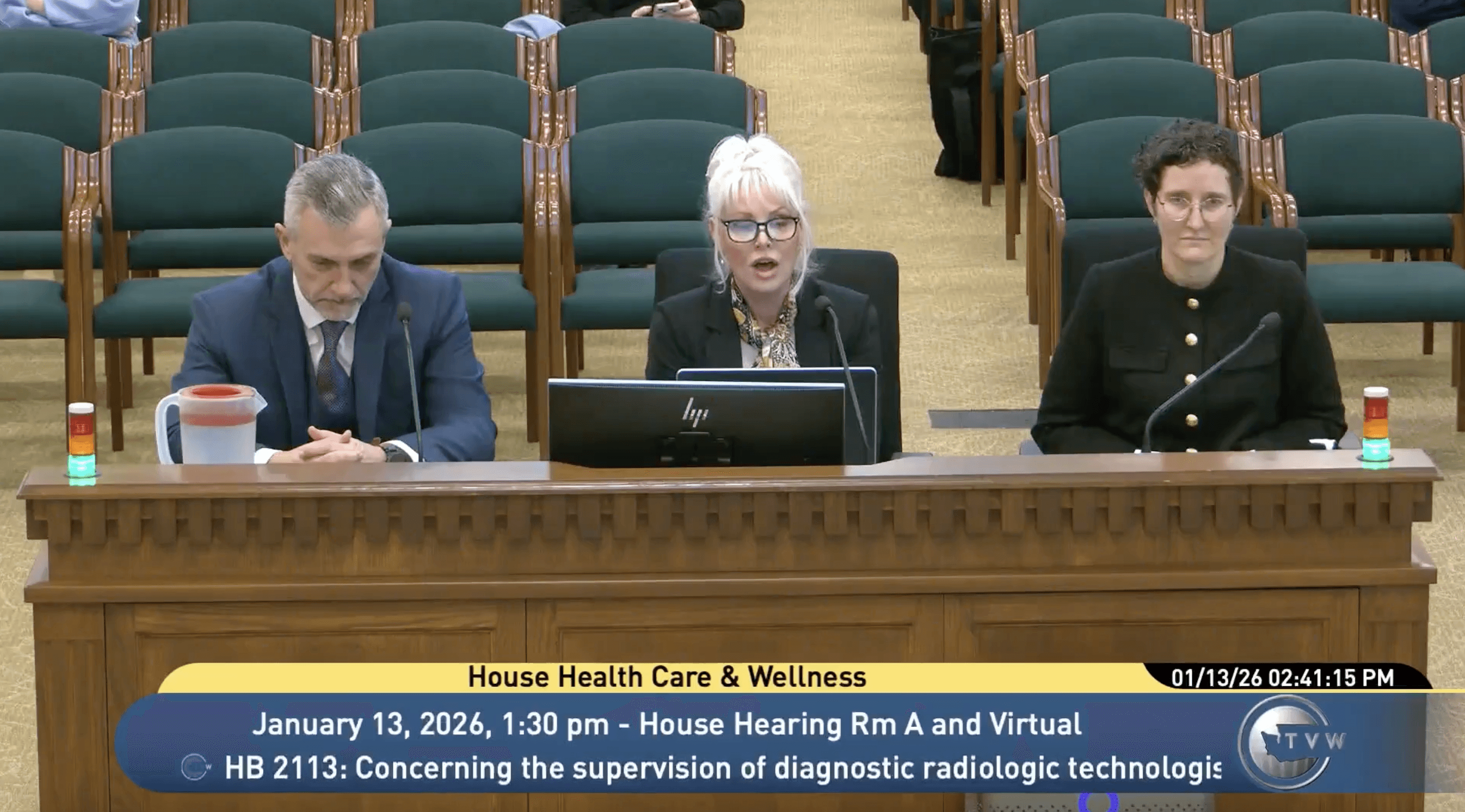
Washington HB 1546: Transforming Radiologic Technologist Supervision for Better Patient Care

Washington HB 1546: Transforming Radiologic Technologist Supervision for Better Patient Care

Washington HB 1546: Transforming Radiologic Technologist Supervision for Better Patient Care

HB 1546 represents a significant advancement in the regulation of radiologic technologists in Washington State. By transitioning from direct to general supervision for IV contrast procedures, the bill not only validates the competence of modern radiologic staff but also supports the growing integration of telemedicine in healthcare. This legislative update is set to improve operational efficiency, expand patient access, and potentially inspire similar reforms in other states, marking a transformative moment for diagnostic imaging and radiologic care.

Tether Supervision

Feb 15, 2025

Legal & Regulatory

Legal & Regulatory

Legal & Regulatory

Washington HB 1546 allows radiologic technologists to perform IV contrast procedures under general supervision, shifting from direct supervision to improve patient care and efficiency using remote supervision and telemedicine.

‍In a landmark legislative move, Washington State’s House Bill 1546 (HB 1546) is set to transform the supervision of radiologic technologists. By permitting diagnostic radiologic technologists, therapeutic radiologic technologists, and MRI technologists to perform intravenous (IV) contrast procedures under general supervision—instead of the traditional direct supervision by a physician—this bill promises enhanced patient care, increased efficiency, and greater flexibility in modern medical imaging practices.

Key Changes Under HB 1546

HB 1546, sponsored by Representatives Parshley, Schmick, Ryu, and Macri, proposes several important changes that could redefine supervision protocols in radiology with proper training:

1. General vs. Direct Supervision:

Current Standard: Washington Department of Health (DOH) rules require that IV contrast procedures be conducted under direct supervision, meaning a physician or osteopathic physician must be physically present (RCW 18.84.020), as direct supervision is currently defined as the appropriate licensed practitioner is on the premises and is quickly and easily available. (WAC 246-926-020(5))

Proposed Change: Under HB 1546, the procedures can be performed under general supervision. This model mandates overall physician oversight without requiring their physical presence in the room. The supervising physician must, however, be within a 30-mile radius and accessible via telemedicine or a rapid on-site response if needed (HB 1546, Sec. 1(5)(b)).

2. Embracing Telemedicine and Remote Supervision: The bill acknowledges the growing trend of remote and virtual supervision in radiology. With radiologists increasingly reading images off-site, HB 1546’s provisions for remote supervision align with modern teleradiology practices, ensuring that patient care remains both effective and efficient.

3. Enhanced Patient Access and Efficiency: By authorizing general supervision, the bill aims to streamline the imaging process, particularly in rural and underserved areas. This change could reduce wait times for diagnostic imaging, expand access to care, and prevent missed opportunities in patient treatment.

Legislative Journey and Implementation

HB 1546 is currently under committee review in the Washington House Health Care & Wellness Committee. Here’s what to expect:

Committee Hearings: The bill will be analyzed through public hearings and stakeholder feedback, ensuring that both patient safety and operational efficiency remain top priorities.

Bicameral Approval: Once passed by the House, the bill must also gain Senate approval before moving to the Governor’s desk.Effective Date: If approved, the new regulations will take effect 90 days after the legislative session adjourns.

Why HB 1546 Matters for Radiologic Technologists and Patient Care

1. Boosting Confidence in Radiologic Expertise: The proposed changes highlight the advanced training and expertise of radiologic technologists. Their ability to safely administer IV contrast under general supervision reflects a broader confidence in their skills and the quality of care they deliver while using remote contrast supervision.

2. Aligning with Federal Guidelines: Although federal regulations from CMS and guidelines from the American College of Radiology (ACR) still call for direct supervision in certain cases, HB 1546 serves as a significant endorsement of remote contrast supervision and the existing on-site staff capabilities. This move may even encourage future updates to federal policies to reflect current telemedicine practices.

3. Expanding Healthcare Access: With the remote supervision model, healthcare facilities can operate more efficiently, particularly in areas where a radiologist’s physical presence may be challenging. This change is a proactive step toward increasing access to virtual contrast supervision, reducing delays in imaging services, and improving overall patient outcomes.

Disclaimer: This blog post is provided for informational purposes only and should not be construed as legal or medical advice.

Take the uncertainty out of contrast supervision.

We’ll support your team every step of the way, from onboarding and training to live supervision and ongoing quality improvement.

Take the uncertainty out of contrast supervision.

We’ll support your team every step of the way, from onboarding and training to live supervision and ongoing quality improvement.

Take the uncertainty out of contrast supervision.

We’ll support your team every step of the way, from onboarding and training to live supervision and ongoing quality improvement.

Read more from Tether Supervision

Tether is the leading platform for virtual contrast supervision, built for speed, safety, and seamless imaging operations.

Expert perspectives on safe, efficient contrast workflows and clinical readiness.

Tether is the leading platform for virtual contrast supervision, built for speed, safety, and seamless imaging operations.

Summary of the article: California's AB 460 signed into law, allowing virtual direct supervision for contrast-enhanced imaging (CT/X-ray) starting January 1, 2026, aligning state law with CMS rules and improving access and operational efficiency while maintaining patient safety through required onsite licensed personnel and safety protocols.

Tennessee Advances Amendment to X-Ray Rules to Modernize Contrast Supervision

On November 17, 2025, the Tennessee Board of Medical Examiners voted to approve a significant amendment to its X-ray supervision rules governing the use of contrast media. While the final regulatory text has not yet been published, the Board’s discussion and unanimous vote make the direction of the change clear.

The proposal first entered the Development Committee on September 19, 2025, where members began evaluating the need for a modernized supervision standard. Between September and November, the committee held discussions, gathered stakeholder input, reviewed training requirements, and ultimately advanced the amendment to the full Board for action. On November 17, 2025 the board unanimously passed that graduated Development Committee proposal.

A complete recording of the Board’s November 17 vote is available on the Tether Supervision YouTube channel here.

For imaging centers, radiology practices, and supervising physicians, this marks an important shift: Tennessee is preparing to modernize its supervision standards in a way that expands access, aligns with national policy, and maintains clinical safety.

What the Current Rule Says

Tenn. Comp. R. & Regs. 0880-05-.12:

(1) Before being authorized to perform any x-ray procedure or operate any x-ray equipment in a physician's office, the physician shall place a copy of the person's renewal certificate in the person's personnel file to prove the person being authorized has the appropriate certification required for either or both the procedure being performed and/or the equipment being used and that such certification is current.

(2) The employing physician(s), or a physician designated by the employing physician(s) as a substitute supervisor, shall exercise close supervision and assume full control and responsibility for the services provided by any person certified under this chapter of rules employed in the physician(s') practice. That supervision, control and responsibility, except when it involves contrast imaging or involves sedation, does not require the physical presence of the physician(s) at all times at the site where the services are being provided.

However, it does require that the physician(s) have his/her primary medical practice physically located within the boundaries of the state of Tennessee and that he/she be capable of being physically present at the site where the services are being provided within a reasonable time depending upon the type of x-ray being performed and the severity of the medical complications that may arise from that type of x-ray.

Under the current version of Tenn. Comp. R. & Regs. 0880-05-.12:

  • A physician does not need to be physically present to supervise most X-ray procedures.

  • But there are two exceptions:

    • Contrast administration, and

    • Sedation

These exceptions have historically required more restrictive, in-person supervision models.

What the Board Approved on November 17

Based on the transcript of the meeting, the Board approved an amendment that:

  1. Updates the X-ray rules to address supervision for contrast administration.

    The Board emphasized that the change is intended to increase access to care without compromising quality.

  2. Allows contrast supervision to follow the same CMS supervision approach used for contrast X-ray procedures, rather than requiring physical presence.

  3. Incorporates a training and competency framework, with explicit reference to ACLS and contrast-allergy-specific training requirements—an important safeguard the Board discussed in detail.

  4. Applies not only to contrast supervision but also clarifies general supervision standards within this section of the rules.

  5. Passed unanimously, with strong support from the Development Committee and no objections raised by the Board.

Once the final rule text is released, we will confirm the precise language. But the Board’s explanation makes the intent clear: Tennessee is embracing a modern, real-time model of supervision for contrast-enhanced imaging.

Why This Matters

1. Improved Access to Care

The Board underscored the need for greater flexibility, particularly for rural communities and high-volume centers that face staffing constraints. Updating the rule allows practices to staff more efficiently without sacrificing patient safety.

2. Alignment with Federal Policy

CMS has permanently authorized real-time audio-video technology to satisfy “direct supervision” requirements beginning January 1, 2026. Tennessee’s proposed amendment reflects this national shift.

3. Clearer Standards for Training and Safety

The Board highlighted the importance of formal training in managing contrast reactions and complications. This creates a consistent statewide expectation for technologists and supervising physicians.

4. A More Modern Framework for Imaging Centers

By moving away from rigid physical-presence requirements, Tennessee enables imaging centers to operate under a more efficient and predictable supervision model.

What Happens Next

The amendment now moves through Tennessee’s rulemaking process, including:

  • Finalization of the regulatory language

  • Filing with the Tennessee Secretary of State

  • Publication and effective date

As soon as the final text is published, we will provide a detailed analysis of:

  • Exact supervision requirements

  • Whether any location-based limitations remain

  • Technologist training expectations

  • Implementation timeline

  • Impact on hospital, outpatient, and mobile imaging providers

We Will Update This Article When the Final Rule Becomes Public

We will continue monitoring the Tennessee rulemaking process closely and will publish updates as more information becomes available. If you operate imaging centers in Tennessee or support supervision workflows, stay tuned—2026 may bring a more flexible, modern approach to contrast supervision statewide.

Summary of the article: California's AB 460 signed into law, allowing virtual direct supervision for contrast-enhanced imaging (CT/X-ray) starting January 1, 2026, aligning state law with CMS rules and improving access and operational efficiency while maintaining patient safety through required onsite licensed personnel and safety protocols.

CMS Finalizes 2026 PFS and OPPS Rules: Virtual Direct Supervision Becomes Permanent for Level 2 Diagnostic Tests

With two coordinated rules, the 2026 Medicare Physician Fee Schedule (PFS) Final Rule, issued October 31, 2025, and the 2026 Hospital Outpatient Prospective Payment System (OPPS) Final Rule, issued November 21, 2025, CMS has permanently authorized the use of real-time, two-way audio-video technology to meet “direct supervision” requirements for many diagnostic tests, including advanced imaging with contrast, across both office-based and hospital outpatient settings. These policies take effect January 1, 2026.

For imaging leaders, radiology groups, and hospital administrators, this is a structural change, one that reshapes how contrast-enhanced CT and MRI can be supervised, staffed, and scaled. For Tether Supervision, it further validates the model we were built for: safe, compliant virtual supervision paired with on-site support.

What CMS Means by Virtual Direct Supervision

Under both the PFS and OPPS rules, CMS maintains the classical definition of direct supervision: the supervising clinician must be immediately available to assist throughout the performance of the diagnostic test. What has changed is how that presence can be fulfilled. Beginning in 2026, immediate availability may be achieved via real-time, two-way, interactive audio and video. The connection must remain active and capable of supporting live intervention for the entire duration of the test. Audio-only communication does not satisfy the standard, and services associated with 010- and 090-day global surgical periods remain excluded due to safety and postoperative considerations.

This distinction is particularly relevant to advanced diagnostic imaging, where Level 2 tests such as CT with contrast and MRI with contrast have always required direct supervision. CMS’s updated rules mean that these contrast-enhanced studies can now be supervised virtually, provided the supervising radiologist or NPP maintains continuous, real-time audio-video availability and can interrupt other activities when needed.

The Role of State Law and Scope-of-Practice Requirements

Although the Medicare rules establish a federal baseline, CMS repeats in both the PFS and OPPS regulations that virtual direct supervision is permissible only where state law allows—or does not explicitly prohibit—remote supervision. Many states are modernizing radiologic technologist scope-of-practice statutes to align with contemporary imaging workflows, but others maintain legacy supervision frameworks or remain ambiguous regarding virtual supervision in contrast studies. Imaging centers, radiology groups, and health systems therefore must reconcile three layers of policy: CMS reimbursement rules, state practice acts and board guidance, and internal medical staff bylaws and privileging standards.

Because contrast administration often triggers specific state-level requirements around competency, escalation, and adverse reaction management, a careful review of state rules remains necessary even after CMS’s 2026 changes. A compliant virtual supervision program is one that satisfies Medicare’s technology requirements and state-based supervision constraints simultaneously.

Operational and Clinical Implications for Imaging Centers

For imaging leaders, these changes have immediate implications for staffing, coverage models, and workflow design. Virtual direct supervision allows a supervising radiologist to remain “immediately available” without being physically located in the imaging suite, enabling new models of multi-site coverage—particularly valuable in rural and underserved regions where securing on-site supervision has historically been challenging. Hospitals and health systems may now design hybrid models that combine qualified on-site technologists or nurses with a remotely available supervising physician, increasing the reliability of coverage while reducing staffing inefficiencies.

This shift places greater emphasis on training for on-site personnel, who must recognize and escalate adverse reactions, execute protocol adjustments under supervision, and operate within state scope-of-practice boundaries. It also requires imaging organizations to evaluate their technology infrastructure. Real-time audio-video capability must be HIPAA-compliant, stable, and documented. Audit trails—who supervised, when, and under which circumstances—become central to both compliance and risk management. Quality assurance programs will increasingly track response times, contrast reaction management, and adherence to virtual supervision protocols as part of continuous oversight.

Why This Matters for Contrast-Enhanced CT and MRI

Advanced imaging with contrast often represents the most operationally complex portion of outpatient radiology. These Level 2 diagnostic tests require oversight from a radiologist or qualified NPP who is immediately available to intervene should patient status change. By making virtual direct supervision permanent, CMS is aligning supervision standards with the realities of modern imaging: distributed networks, uneven geographic supply of radiologists, and rising demand for high-acuity diagnostic studies.

Virtual direct supervision offers imaging centers the ability to stabilize coverage, improve scheduling flexibility, reduce delays, and ensure that Medicare beneficiaries receive timely access to imaging—even when in-person supervision is not feasible. As a result, patients benefit from shorter wait times and more consistent quality of care across locations.

How Tether Supervision Supports Compliance and High Reliability

Tether Supervision was built for the workflows CMS has now formally recognized. Our platform—and the broader Tether model—supports real-time, HIPAA-compliant audio-video supervision that satisfies Medicare’s direct supervision requirements while integrating seamlessly with on-site technologists. We help clients align federal regulations with state laws, update internal supervision policies, and train teams to confidently operate under virtual supervision conditions. Because our model includes both virtual and on-site coverage when required, imaging centers can adapt to state variations and mixed-site footprints without the fragmentation seen in single-mode vendors.

Beyond compliance, Tether provides structured escalation pathways, incident reporting tools, and QA frameworks designed specifically for contrast-enhanced imaging. These systems allow organizations to demonstrate reliability and readiness—key considerations for hospital leadership, accreditation bodies, and regulatory reviewers.

Key Dates and What’s Next

The two foundational dates for imaging organizations planning 2026 operations are:

  • October 31, 2025 – CMS finalizes the PFS rule making virtual direct supervision permanent for Level 2 diagnostic tests in physician offices and IDTFs.

  • November 21, 2025 – CMS finalizes the OPPS rule extending the same virtual supervision standards to hospital outpatient departments, including off-campus provider-based departments.

  • January 1, 2026 – Both rules take effect, formally integrating virtual direct supervision into Medicare’s standard supervision framework.

Together, these changes mark a decisive shift toward modernized supervision in diagnostic imaging. For health systems preparing for 2026, the focus now turns to updating policies, aligning state law interpretations, credentialing supervising clinicians accordingly, configuring compliant A/V technology, and preparing on-site teams to operate confidently within virtual supervision workflows.

Tether Supervision will continue supporting organizations as they adopt these new standards, ensuring that patient safety, regulatory compliance, and operational efficiency remain at the forefront in this next era of contrast imaging supervision.

Summary of the article: California's AB 460 signed into law, allowing virtual direct supervision for contrast-enhanced imaging (CT/X-ray) starting January 1, 2026, aligning state law with CMS rules and improving access and operational efficiency while maintaining patient safety through required onsite licensed personnel and safety protocols.

Virtual Supervision Officially Recognized in California — AB 460 Signed Into Law

October 7, 2025, marks a milestone for California radiology.

Governor Gavin Newsom has officially signed Assembly Bill 460 (AB 460) into law, modernizing the state’s definition of “direct supervision” for contrast-enhanced imaging procedures.

Beginning January 1, 2026, radiologists in California will be able to meet supervision requirements either in person or remotely via real-time audio and video, with full access to imaging records and the ability to direct licensed onsite personnel.

This marks the first time California has formally recognized virtual supervision as an equivalent, compliant form of direct oversight for contrast-enhanced CT and similar procedures — aligning state policy with existing Centers for Medicare & Medicaid Services (CMS) rules that have been in place since 2020.

What AB 460 Changes

For decades, California required supervising physicians to be physically present within the facility whenever contrast was administered by a technologist — a rule that limited flexibility and often constrained access to care, particularly in rural or multi-site imaging settings.

AB 460 updates this outdated framework by allowing:

  • Virtual direct supervision: Radiologists may now provide real-time oversight via secure audio/video communication (excluding audio-only).

  • Immediate availability: The supervising physician must remain available to intervene or direct onsite personnel if needed.

  • Access to imaging records: Physicians must have immediate access to the relevant imaging information to inform their supervision.

Key compliance detail: When supervision is provided remotely, facilities must have:

  • Written safety protocols for contrast administration and emergencies, and

  • Onsite licensed personnel — a physician, registered nurse (RN), nurse practitioner (NP), clinical nurse specialist (CNS), or physician assistant (PA) — available to respond at the physician’s direction.

This onsite requirement must be reflected in both protocol documentation and staffing models for compliance.

Why AB 460 Matters for Imaging Centers

AB 460 represents a transformative update for outpatient imaging and radiology operations.

1. Expands Access to Care: For rural and community-based imaging centers, the ability to leverage virtual supervision ensures patients can access contrast-enhanced exams without delays or rescheduling due to radiologist availability.

2. Strengthens Patient Safety: By requiring trained onsite clinicians and standardized emergency protocols, the new law maintains — and in many cases, enhances — safety standards while enabling modern, technology-driven workflows.

3. Aligns with CMS Policy: CMS has recognized virtual direct supervision for diagnostic testing and incident-to services since 2020. AB 460 finally brings California’s Health & Safety Code into alignment with these federal standards, eliminating the compliance tension between state and federal definitions.

4. Reduces Operational Bottlenecks: Facilities can now scale coverage across multiple sites more efficiently, improving scheduling flexibility and optimizing radiologist workloads — without sacrificing oversight or compliance.

Tether Supervision’s Role in the Legislative Process

Tether Supervision closely tracked and contributed to AB 460 from its early drafts through final passage.

Our policy and operations team submitted written feedback and recommendations that helped refine the bill’s language — including clarifying the scope of virtual supervision and the requirements for onsite clinical responders.

We also worked alongside imaging leaders and advocacy groups to ensure the legislation supports:

  • Equitable access for small, rural, and independent imaging centers

  • Clarity for radiologists and administrators designing compliant workflows

  • Consistency with federal CMS and ACR standards

AB 460’s final language reflects a balance between safety, access, and operational practicality — the same balance that underpins Tether’s supervision model.

Preparing for Implementation: What Centers Should Do Now

With the law set to take effect on January 1, 2026, imaging centers should begin preparing their infrastructure, documentation, and staff training now.

Tether recommends:

  • Reviewing current supervision protocols to identify areas that require revision for compliance under AB 460.

  • Updating written procedures to incorporate virtual oversight workflows, including contrast reaction escalation and documentation standards.

  • Verifying onsite coverage — ensure licensed personnel are consistently available to respond during remote supervision.

  • Implementing HIPAA-compliant AV technology capable of supporting real-time communication and record access.

  • Training technologists and onsite staff on the new expectations for communication and escalation under virtual oversight.

Tether provides direct guidance and implementation support to imaging centers navigating this process, ensuring a smooth transition that’s fully compliant by 2026.

A Win for Radiology — and for Patients

AB 460 is more than a policy win. It’s a signal that California is ready to modernize supervision and embrace the proven safety and efficiency of virtual radiology oversight.

  • For imaging centers, it means fewer delays, more flexibility, and broader patient access.

  • For radiologists, it means a sustainable, scalable model for coverage.

  • For patients, it means timely, high-quality care delivered where and when it’s needed most.

At Tether Supervision, we’re proud to have supported this effort and remain committed to helping imaging centers translate legislation into safe, compliant, real-world practice.

We’re here to help your center prepare for implementation in 2026 — and lead confidently through the transition.